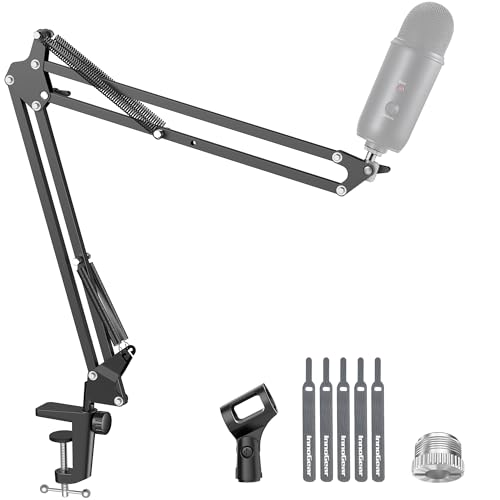

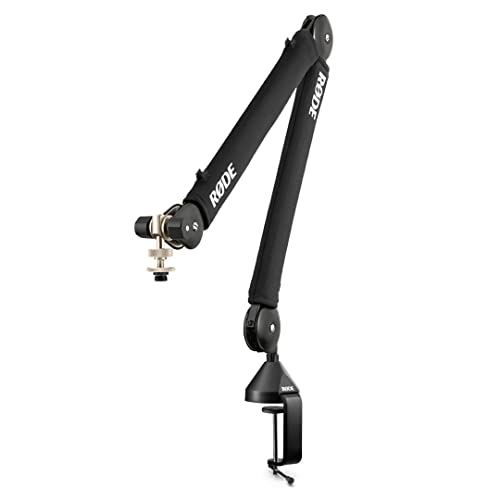
Setting up a compact recording environment requires balancing space efficiency with clean audio capture. For most creators, the RØDE PSA1+ Professional Studio Boom Arm is the standout choice because its internal spring damping eliminates desk vibration noise entirely. If you want a budget friendly option that fits tight spaces, the InnoGear Boom Arm Microphone Mic Stand for Blue delivers great reach without crowding your workspace.
We evaluated 5 top options for September 2026 to find gear that withstands daily broadcast demands. You can also explore our how-to guides for studio setups for broader ergonomics advice.


Best Microphone Arms for Small Podcast Studios Buying Guide
Desk Clamp Footprint and Space Clearance
Small recording desks rarely have room for bulky C-clamps or wide mounting bases. You need an arm clamp that secures tightly to desk edges without protruding into your knee space or hitting backdrops.
Measure your desk thickness and check rear wall clearance before choosing a mounting mechanism. A slim clamp or grommet mount option ensures the arm remains anchored without scuffing desktop finishes.
Weight Capacity and Tension Adjustment
Heavy dynamic microphones with shock mounts can cause weak boom arms to sag over time. Choosing an arm rated for your specific payload prevents sudden drops during live recording sessions.
Internal spring damping is equally important because external springs often emit squeaks when re-positioned mid-take. Quiet internal mechanics keep handling noise away from sensitive microphone capsules.
Range of Motion and Joint Smoothness
Compact studio setups demand three hundred sixty degree rotation and flexible angle adjustments at every joint. This movement range allows you to swing the microphone directly to your mouth and push it clear when drafting notes.
If you manage multiple screens, pair your mic setup with gear from our list of desktop and external workstation accessories to maximize total surface space. Smooth elbow joints prevent awkward torso twisting during long shows.
Cable Management and Wire Routing
Loose XLR or USB cables quickly clutter tiny workstations and catch on monitor edges. Integrated cable channels or clip systems keep wiring flush along the boom arm tubing for a clean aesthetic.
Hidden cables also reduce physical strain on microphone output ports by preventing accidental tugs. A neat cable run maintains a professional visual presentation for video podcasts and live streams.
Thread Adapter and Mount Compatibility
Most broadcast microphones use standard three-eighths or five-eighths inch threaded adapters for mounting. Ensuring your boom arm includes compatible metal adapters saves you from buying extra hardware online.
Sturdy thread adapters prevent microphone wobble and allow fast switching between dynamic and condenser models. Always double check payload ratings if you plan to attach heavy pop filters.
How We Evaluated
We analyzed key technical specifications including load capacities, desk clamp dimensions, and rotation angles across popular studio hardware. Our team compared build materials like high grade steel and internal damping systems to evaluate long term durability.
We also examined setup flexibility, cable routing efficiency, and adapter compatibility to highlight products that maximize floor and desk real estate. This data driven approach ensures balanced recommendations tailored for small podcasting environments.
Common Mistakes to Avoid
Overlooking maximum desk clamp thickness is a frequent error that prevents proper mounting on thicker wood or standing desks. Always verify clamp opening measurements against your table specs before ordering.
Ignoring payload minimums can cause high tension arms to spring upward when paired with lightweight USB microphones. Match your microphone weight accurately to the arm spring specifications.
Forgetting cable length requirements often leaves wires pulled tight when extending boom arms to full reach. Always allow extra cable slack near rotational elbow joints to protect equipment ports.
Pairing tight desk spaces with wide external monitor arms without planning spatial layout leads to physical collisions. Consider reviewing computer displays and desk gear to coordinate arm placement seamlessly.
Buying Checklist
- Measure desk edge thickness to verify clamp jaw compatibility.
- Confirm rear wall clearance for full arm rotation and elbow extension.
- Check total microphone payload including shock mounts and pop filters.
- Verify thread adapter size for your current microphone model.
- Ensure internal channel cable management fits your XLR wire thickness.
- Select internal spring designs to avoid mechanical creaks on mic tracks.
- Confirm grommet mounting options if edge clamping is not possible.
Final Thoughts
Building a streamlined home studio begins with choosing reliable mounting gear that keeps your work surface clear. For high end whisper quiet movement, we highly recommend the RØDE PSA1+ Professional Studio Boom Arm for any serious podcaster.
Podcasters working on a strict budget will appreciate the compact efficiency of the InnoGear Boom Arm Microphone Mic Stand for Blue which handles everyday recording with ease. If you prefer a complete studio starter set, the MAONO PD200XS XLR/USB Dynamic Microphone Kit offers ideal value out of the box.
Balancing audio performance with physical desk space creates a comfortable environment for content production. For additional guidance on optimizing your workspace ergonomics, explore our review of the best external computer monitors for comfort at work today.
Frequently Asked Questions
Why should I use a boom arm instead of a desktop stand for Best Microphone Arms for Small Podcast Studios in 2026?
Desktop stands easily pick up keypress vibrations and desk bumps while taking up valuable surface area. A quality boom arm elevates your microphone away from desk surfaces and allows precise placement close to your mouth for cleaner sound capture.
How do I know if my microphone is compatible with these boom arms?
Most dynamic and condenser microphones use standard three-eighths inch or five-eighths inch threaded connectors. Included adapters allow these arms to support popular models like the Shure SM7B, Blue Yeti, and MAONO dynamic series easily.
Will a boom arm hold heavy dynamic microphones without sagging?
Yes, provided you select an arm rated above your microphone total weight. Options like the RØDE PSA1+ Professional Studio Boom Arm easily support heavy setups up to 1.2 kilograms without losing height position.
Can I install a boom arm on a glass desktop?
Clamping directly onto glass can cause stress fractures under heavy load or movement torque. If you have a glass table, use a reinforced grommet mount or place protective rubber padding underneath the clamp base to distribute tension.
What is the benefit of internal spring damping in 2026 podcast setups?
Internal spring damping isolates mechanical spring tension inside padded tubing, preventing creaks and ringing sounds. This design keeps handling noise out of your audio recordings when adjusting arm positions mid-stream.
How much space behind my desk do I need for full arm extension?
Most boom arms require three to five inches of rear wall clearance to fold back naturally. Choosing a low profile arm or placing your clamp near a desk corner helps maximize extension options in cramped quarters.
Are XLR cables included with all microphone boom arm kits?
Standard boom arms generally do not come with XLR cables unless specified in a complete mic bundle kit. You should check included box accessories to confirm whether separate cabling is required for your audio setup.