When building a near-silent system, the be quiet! Dark Rock Elite Air CPU Cooler stands out as our top overall choice for 2026. It pairs dual high-pressure Silent Wings fans with an advanced speed switch to suppress acoustic output even under demanding CPU workloads.
For builders seeking exceptional thermal efficiency on a budget, the Thermalright Peerless Assassin 120 SE CPU Cooler provides remarkable cooling performance at an accessible price point. If you want to optimize your entire workstation layout, explore our guide on best external computer monitors for comfort at work to build a quiet and productive setup.



Best Air CPU Coolers for Quiet Operation Buying Guide
Acoustic Profile and Fan Bearing Technology
Selecting coolers for low sound levels requires looking closely at fan bearing designs. Fluid dynamic bearings and magnetic levitation motors reduce mechanical friction inside the motor housing. Lower friction translates directly to reduced motor hum during long computing sessions.
Fan blade geometry also plays a vital role in keeping decibel levels low. Blades designed with steep attack angles generate static pressure without requiring ultra-high rotation speeds. Operating fans under 1500 RPM prevents turbulence that creates pitch oscillation.
Heat Pipe Count and Thermal Transfer
Copper heat pipes quickly transfer thermal energy from the CPU base plate into aluminum fin stacks. Coolers featuring six or seven heat pipes distribute heat across a wider surface area. This distribution allows fans to run at lower speeds while keeping temperatures safe.
Modern heat pipes utilize anti-gravity capillary structures that function efficiently in both vertical and horizontal computer cases. Proper thermal transfer prevents sudden CPU temperature spikes. Stable temperatures mean fan control curves remain flat, preventing annoying speed ramping.
If you are also setting up an ergonomic workstation with minimal noise, consider our insights on best hi res monitors for productivity and comfort to match your quiet system setup.
Tower Architecture and Fin Density
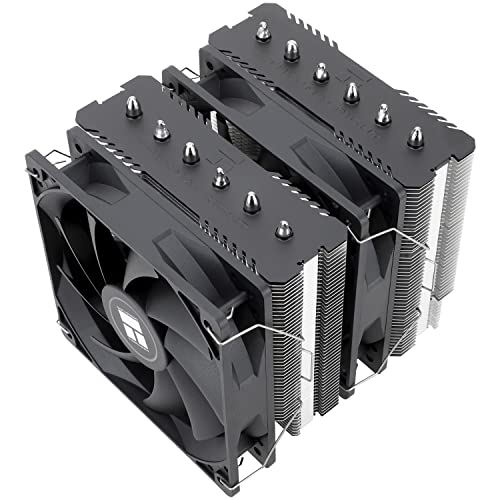
Dual-tower coolers split the aluminum surface area into two separate heatsink blocks. Placing a fan between the towers creates a push-pull airflow configuration that moves warm air out swiftly. This dual-block layout maximizes passive heat dissipation before fan speeds ever increase.
Single-tower designs present a smaller profile that favors compact system cases and tall memory modules. Fin spacing in single towers is often optimized to allow low-velocity airflow to pass through easily. Choosing the right tower layout ensures effective cooling without excessive fan noise.
RAM Clearance and Motherboard Compatibility
Large heatsinks can physically block memory slots on modern motherboards. Asymmetrical offset designs shift the heatsink stack away from RAM slots to allow tall heat spreaders. Cutouts along the bottom fins provide essential clearance for standard and high-profile memory sticks.
Checking height dimensions against your computer chassis specifications is equally vital. Most dual-tower air coolers measure between 154mm and 157mm tall. Verifying chassis clearance avoids mounting problems and keeps case side panels properly sealed against acoustic leakage.
PWM Curves and Fan Speed Management
Pulse Width Modulation allows motherboards to control fan speeds precisely based on real-time temperature sensors. Setting custom fan curves keeps fan rotation below 60 percent during normal desktop tasks. This prevents unnecessary fan noise during web browsing or document editing.
Hardware speed switches integrated directly into high-end coolers provide hard ceiling limits on fan RPM. Using a quiet profile caps maximum fan output, guaranteeing soft acoustic levels even under extreme synthetic CPU benchmarks. You can review detailed tutorials in our How To section for system tuning tips.
| Cooler Model | Tower Layout | Heat Pipes | Max Fan Speed |
|---|---|---|---|
| be quiet! Dark Rock Elite | Dual Tower | 7 Copper Pipes | 1500 / 2000 RPM |
| Thermalright Peerless Assassin 120 SE | Dual Tower | 6 Copper Pipes | 1550 RPM |
| ARCTIC Freezer 36 | Single Tower | 4 Copper Pipes | 1800 RPM |
| ID-COOLING FROZN A620 PRO SE | Dual Tower | 6 Copper Pipes | 1500 RPM |
How We Evaluated
Our evaluation process relies on objective manufacturer specifications, verified mechanical measurements, and fan acoustic documentation. We analyzed thermal transfer ratings, decibel figures at maximum RPM, and fan bearing engineering across 7 models from top brands like Thermalright, ARCTIC, be quiet! and more.
We evaluated heatsink surface areas, heat pipe arrangements, and memory clearance dimensions to determine how each cooler balances thermal efficiency with low noise output. This data-driven comparison ensures our recommendations reflect real-world installation compatibility and acoustic stability.
Common Mistakes to Avoid
A frequent error among PC builders is assuming that larger fans always run quieter than smaller ones. While a 135mm fan moves more air, poor bearing quality or aggressive fan blade pitch can generate unpleasant hums regardless of diameter.
Another common mistake is neglecting physical memory height when selecting a dual-tower cooler. Installing high-profile RGB RAM often forces builders to raise the front fan, increasing overall cooler height beyond case clearance limits.
Finally, many users forget to calibrate their motherboard fan curves after installation. Running quiet-focused air coolers on default aggressive motherboard profiles causes fans to spin up prematurely, wasting their silent design benefits.
Buying Checklist
- Verify cooler height against your PC case maximum CPU cooler clearance specifications.
- Confirm socket compatibility for your specific Intel or AMD motherboard platform.
- Check memory module height to ensure sufficient clearance under the front fan.
- Examine fan bearing types to favor fluid dynamic or magnetic bearings for longevity.
- Review maximum noise output ratings measured in decibels under maximum thermal load.
- Ensure motherboard headers include available 4-pin PWM ports for dynamic speed regulation.
- Inspect heat pipe technology to verify anti-gravity capillary performance for your orientation.
Final Thoughts
Choosing the right CPU air cooler allows you to maintain high computing performance without suffering from loud acoustic hums. For users demanding maximum thermal performance alongside whisper-quiet acoustics, we recommend the be quiet! Dark Rock Elite Air CPU Cooler for its dual-mode speed options and premium dampening design.
If you prefer an exceptional balance of price and double-tower cooling capacity, the Thermalright Peerless Assassin 120 SE CPU Cooler delivers outstanding thermal transfer at a modest investment. For compact builds that require high static pressure in a single-tower footprint, the ARCTIC Freezer 36 (Black) serves as a reliable solution.
Pairing a quiet CPU cooler with high-quality peripherals creates a peaceful workspace. You can explore our guide on best external monitors or browse our Desktop & External Monitors section to complete your ideal desk configuration in 2026.
FAQs
Are air CPU coolers quieter than liquid AIO coolers?
Air coolers eliminate pump noise, which is a constant source of low-frequency hum in liquid AIO loops. High-quality air coolers running dynamic PWM fans often run quieter during light and moderate desktop tasks.
What noise level is considered quiet for Best Air CPU Coolers for Quiet Operation in 2026?
Air coolers producing peak noise levels below 26 dB(A) are generally considered quiet. At standard operating speeds, these models remain nearly imperceptible inside a closed computer chassis.
How many heat pipes do I need for silent CPU cooling?
Six or seven heat pipes provide ample thermal headroom for modern processors. More heat pipes dissipate thermal energy faster, allowing fans to maintain low RPM speeds without CPU overheating.
Does fan bearing type affect noise output over time?
Yes, fluid dynamic bearings and magnetic bearings maintain low acoustic levels throughout their lifespan. Standard sleeve bearings tend to dry out and grow louder as mechanical friction increases over extended use.
Can I use high-profile RAM with dual-tower CPU coolers?
Many dual-tower designs feature offset heat pipes or fin cutouts to clear tall RAM modules. Alternatively, you can adjust the height of the front fan on compatible mounting rails.
What is the benefit of a push-pull fan setup on single-tower coolers?
A push-pull fan configuration increases static pressure across the heatsink fins. This extra airflow velocity allows both fans to spin at lower speeds while moving the same volume of heat.
How do I set up custom fan curves for low acoustic output?
You can configure fan curves through your motherboard BIOS settings or software utilities. Set fan speeds to remain flat at 30 to 50 percent until CPU temperatures cross 65 degrees Celsius.
Where can I find more setup tips for desktop building in 2026?
Check out our comprehensive guide on best high resolution monitors for comfort and value to learn more about optimizing desktop workspaces for comfort and productivity.