

Finding the right solution among Best Rotating Monitor Stands depends on screen size, desk space, and how often you pivot your display. For single screen users needing smooth motion and long lasting stability, the Ergotron – Upgraded LX Pro Premium Monitor Arm stands out as our top overall choice. It delivers effortless 360 degree rotation and broad VESA compatibility, making it ideal for professionals who switch between coding in portrait mode and editing photos in landscape. You can learn more about display choices in our guide to Desktop & External Monitors.
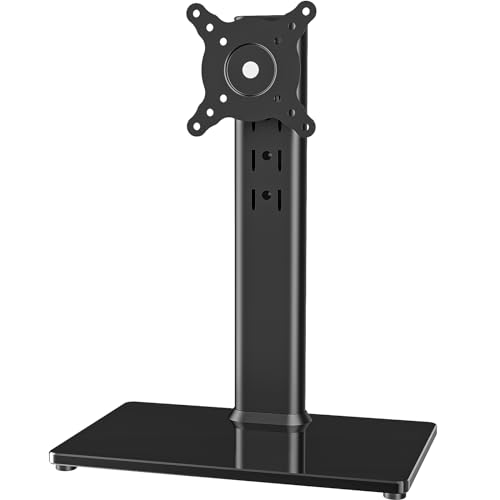
If you prefer a simple tabletop riser without clamping an arm to your desk edge, the pyntop 360° Rotation Monitor Swivel Base Computer offers an affordable turntable solution. For heavy ultrawide screens, the Heavy Duty Single Monitor Mount for 13″-49″ handles demanding setups with ease. Below, we compared 7 top options for November 2026 across Hemudu, pyntop, ARES WING and more to help you find the perfect fit.


Best Rotating Monitor Stands Buying Guide for 2026
Mounting Mechanism: Clamps, Grommets, and Turntables
Selecting the right physical mounting style is the first critical decision when evaluating Best Rotating Monitor Stands. Desk clamps and grommet mounts attach directly to the edge or hole of your desk, offering the maximum freedom of movement and elevated clearance.
Freestanding risers and turntable bases provide a non-permanent alternative that requires zero assembly on the desk surface itself. While turntables move the monitor flat across the desk plane, heavy duty gas spring arms let you lift, tilt, and spin the display freely in three dimensions.
If you work on glass desks or thin composite surfaces, verify that your workstation can support concentrated clamp pressure. For more insights on optimizing your display, check our guide to best external computer monitors for comfort at work.
Weight Capacity and Screen Size Limits
Every monitor arm or rotating stand is engineered for specific display weight and diagonal dimension ranges. Exceeding the maximum weight rating can cause the arm to sag or fail to retain portrait rotation orientation.
Check your display spec sheet for its net weight excluding the original factory stand base. Heavy ultrawide monitors require specialized gas spring tension to prevent unexpected forward tilting during orientation changes.
Rotation Range and Joint Fluidity
Full 360 degree rotation allows you to position your screen vertically for reading long documents, writing code, or inspecting vertical web layouts. Look for internal rotational stops or smooth friction joints that hold your chosen angle firmly without slipping.
Stiff joints make rotating your monitor frustrating and risk putting unnecessary stress on the display bezel. Premium mounts incorporate adjustable tension screws so you can fine tune the rotation resistance to match your monitor weight.
VESA Pattern Compatibility
Most computer screens adhere to standardized VESA hole patterns on the rear panel, typically measuring 75x75mm or 100x100mm. Confirming your display pattern before purchase guarantees a direct match without needing secondary adapter plates.
Quick release VESA plates significantly simplify assembly by allowing you to attach the bracket to the monitor first before sliding it onto the arm. If you plan on upgrading your screen, review our breakdown of best high resolution monitors for comfort and value.
Height Adjustment and Vertical Ergonomics
Rotating a widescreen monitor into portrait mode requires sufficient vertical clearance above the desktop surface. If the center pole or gas spring arm lacks adequate elevation, the bottom corner of your monitor will scrape the desk.
Measure your monitor height in landscape mode and ensure your chosen stand lifts the center of the display to eye level. Proper height placement aligns your neck naturally and reduces spinal tension during long working hours.
Cable Management and Desk Clearance
Rotating a screen 90 or 180 degrees tugs on display and power cables if they are routed too tightly. Integrated cable channels keep cords organized while leaving enough slack for effortless rotation without snagging.
Clean cable management also reclaims valuable real estate beneath the screen for speakers or keyboards. Placing your display on a raised arm eliminates desk clutter and transforms overall workspace organization.
How We Evaluated
We evaluated options for Best Rotating Monitor Stands by analyzing manufacturer specifications, load capacities, joint articulation limits, and structural materials. Our review focuses on practical desk stability, VESA mounting standard adherence, and long term durability under daily rotation movement.
By comparing gas spring mechanisms against mechanical clamped posts and tabletop turntables, we identified top choices for varied office setups. We prioritized products that offer reliable cable management, straightforward installation steps, and smooth tension control.
Common Mistakes to Avoid
Forgetting to measure cable slack before rotating your screen is a common mistake that can damage ports or dislodge power connections. Always leave additional length when routing cables through internal arm channels to accommodate 360 degree spins.
Ignoring the net weight of your display leads to improper arm tension and dipping screens. Always calculate your monitor weight without its factory base before comparing options against maximum weight limits.
Overlooking desk thickness and material composition can cause clamp damage or loose mounting. Ensure your desktop falls within the supported clamp range and avoids fragile glass edges unless a grommet option is available.
Assuming all monitors swivel without clearance checks often results in screen corners hitting the desk in portrait mode. Verify the vertical lift height of your stand relative to half of your display width.
Buying Checklist
- Verify rear monitor VESA mounting patterns match 75x75mm or 100x100mm dimensions.
- Confirm monitor net weight excluding base falls within the stand minimum and maximum capacity.
- Measure desk thickness to ensure full compatibility with C-clamp or grommet hardware limits.
- Check maximum arm height to guarantee enough clearance when turning screen into portrait mode.
- Ensure video and power cables have sufficient extra slack to spin without pulling on ports.
- Assess whether you prefer gas spring dynamic adjustments or stationary manual post locks.
- Review desktop material strength to withstand concentrated mounting tension securely.
Final Thoughts
Upgrading your workspace setup with a versatile stand transforms daily productivity and posture. Choosing from the Best Rotating Monitor Stands gives you the flexibility to transition between widescreen spreadsheets and tall document views in seconds.
For single screen setups requiring top tier motion quality, we recommend the Ergotron – Upgraded LX Pro Premium Monitor Arm for its exceptionally smooth fluid joints and long warranty. Budget conscious users who want non invasive swiveling without mounting clamps will appreciate the compact pyntop 360° Rotation Monitor Swivel Base Computer.
If you manage large ultrawide displays or dual screens, heavy duty options like the Heavy Duty Single Monitor Mount for 13″-49″ or the Dual Monitor Arm Desk Mount for 17-49 Inch supply the structural strength needed. You can explore additional display options in our overview of Computer Monitors & Displays.
Frequently Asked Questions
Can any monitor be used with Best Rotating Monitor Stands in 2026?
Most modern monitors work with rotating stands provided they feature standard VESA mounting holes on the back panel. If your monitor lacks VESA holes, you will need a third-party bracket adapter to secure it safely to an arm.
How does portrait mode rotation benefit productivity?
Rotating your display to vertical orientation displays more lines of text, code, or documents without requiring constant scrolling. It is especially helpful for programmers, writers, and data analysts who review tall layouts regularly.
What is the difference between a gas spring arm and a swivel base?
A gas spring arm attaches via desk clamp to offer full elevation, tilt, and 360 degree rotation in mid-air. A swivel base sits directly on your desktop, rotating the monitor horizontally on a flat turntable without height adjustments.
Do rotating monitor arms work with curved or ultrawide screens?
Yes, heavy duty monitor arms designed for wide screens can support curved displays up to 49 inches. Always check the weight capacity and tilt mechanism strength, as curved screens shift the weight center forward.
Will rotating my display pull or damage connected cables?
Rotating your screen can strain cables if they are bound too tightly along the stand arm. Leaving adequate slack near the VESA connection allows the monitor to spin freely without stress on display ports.
Is a desk clamp or grommet mount more secure?
Both mounting methods offer exceptional stability when properly installed on solid wood or thick desks. Grommet mounts pass directly through a desk hole for maximum balance, while C-clamps offer quick installation without drilling.
How do I adjust the rotation tension on my monitor arm?
Most articulated mounts include hex screws near the VESA plate joint to adjust pivot tension. Tightening the screw increases friction to hold heavier displays in place, while loosening it allows smoother turning.
Where can I find additional guide resources for workstation displays?
You can discover more helpful tips on setup ergonomics and panel selections by reading our guide on How To optimize workspace comfort and efficiency.









