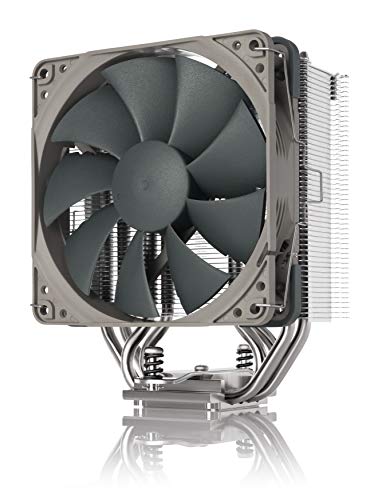
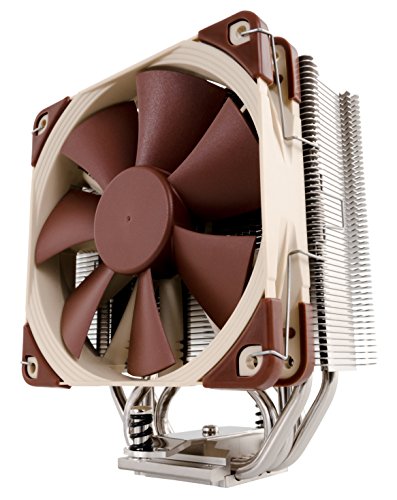
Choosing the right heatsink keeps your processor operating at peak efficiency without introducing distracting fan whir into your workspace. We analyzed 10 options in October 2026 to find the best thermal solutions for silent computing. For most builders, the Noctua NH-U12S Redux, Quiet High-Performance delivers an exceptional balance of acoustic control and straightforward socket clearance.
If you want top performance on a tighter budget, the ARCTIC Freezer 36 (Black) provides dual pressure fans and contact frame mounting for modern sockets. You can also explore our PC building how-to guides to optimize system airflow and overall chassis cooling.


Best Single-Tower Air CPU Coolers: Quiet PC Builds Buying Guide
Heatsink Height and Chassis Clearance
Chassis width directly determines how tall your air cooler can be before it makes contact with side panels. Standard mid-tower cases usually support coolers up to 160mm in height, while compact enclosures often require models under 150mm. Checking your case specifications prevents frustrating fitment issues during your build process.
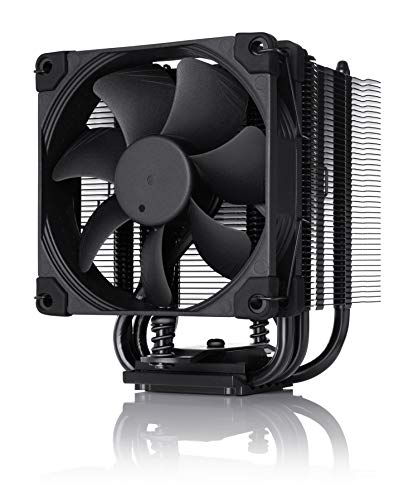
Compact heatsinks like the Noctua NH-U9S chromax.Black stand only 125mm tall, making them ideal for mini-ITX enclosures. Taller towers provide more surface area for heat dissipation but require wider computer cases. Matching cooler height to your chassis ensures seamless assembly and adequate side panel clearance.
Acoustic Tuning and Fan Noise Levels
Quiet computer operation relies on fans that push sufficient air without producing mechanical motor hum or turbulent blade noise. Fluid dynamic bearings and focused airflow blades allow fans to operate at lower RPM values during typical computing tasks. Pulse-width modulation connectors let your motherboard dial back fan speeds automatically when temperatures remain stable.
A cooler rated below 26 decibels remains barely audible during everyday productivity and web browsing sessions. When pairing your silent desktop with desktop and external workstation hardware, low acoustic output prevents fatigue during extended working hours. Investing in quality fan bearings protects against motor whine over long-term ownership.
Heat Pipe Count and Anti-Gravity Technology
Sintered copper heat pipes transfer thermal energy directly from the CPU contact plate into the aluminum fin array. Coolers equipped with four or five 6mm heat pipes efficiently manage modern desktop processors during sustained workloads. Higher pipe counts spread heat evenly across the fin stack to prevent localized hotspots.
Modern designs utilize anti-gravity heat pipe technology to maintain capillary fluid flow regardless of motherboard orientation. This ensures identical thermal performance whether your motherboard sits vertically in a tower or horizontally in an open test bench. Direct contact copper bases also speed up heat transfer away from the processor die.
Memory and PCIe Slot Clearance
Asymmetrical heatsink layouts shift the fin stack away from front-row memory slots to prevent clearance conflicts with tall RAM modules. Symmetrical large coolers can overhang memory banks, forcing builders to raise front fans or use low-profile memory sticks. An offset design guarantees unobstructed access to high-performance memory heat spreaders.
Slim single towers also prevent interference with the primary PCIe slot where your graphics card installs. Motherboards with tight socket spacing benefit significantly from compact cooler footprints that leave ample room for expansion cards. Verifying socket layout drawings ensures all components install without physical contact.
Mounting Systems and Socket Hardware
A sturdy metal mounting system ensures even contact pressure across the integrated heat spreader of modern processors. Spring-loaded screws and dedicated backplates prevent uneven thermal paste distribution and avoid excessive socket tension. Reliable mounting hardware also simplifies future maintenance when cleaning or upgrading hardware.
Top manufacturers include dedicated bracket kits for both Intel LGA1700 and AMD AM5 platforms in the box. Solutions like the ARCTIC Freezer 36 (Black) even include custom contact frames to optimize Intel CPU flatness. Premium mounting mechanisms save installation time and guarantee dependable thermal contact.
Single Fan Versus Push-Pull Configurations
Single-fan setups provide excellent cooling efficiency while keeping overall system noise and power draw to a minimum. Adding a secondary exhaust fan in a push-pull arrangement can lower temperatures by a few degrees under heavy processing loads. This extra fan pulls warm air smoothly out of the fin stack toward chassis exhaust ports.
When configuring dual fans, matching blade speeds prevents harmonic vibrations that create annoying rhythmic hums. If you are building a quiet rig to pair with the best desktop monitors for comfort, value and clarity, keeping fan curves gradual maintains whisper-quiet operation. Push-pull setups work best when extra thermal headroom is necessary for demanding multithreaded tasks.
How We Evaluated
Our evaluation process focused on analyzing technical specifications, physical dimensions, acoustic ratings, and socket compatibility across 10 models. We compared manufacturer acoustic data, fin density measurements, and heat pipe configurations to identify balanced coolers. We prioritized designs that deliver reliable thermal regulation without generating noticeable motor turbulence.
We also assessed installation hardware quality, memory clearance offset geometry, and bundled accessories like thermal compound. Each cooler was evaluated against real-world chassis constraints and common motherboard socket layouts. This data-driven comparison ensures transparent recommendations tailored for quiet computing environments.
Common Mistakes to Avoid
A frequent error is forgetting to peel off the clear protective plastic film from the cooler base before installation. Leaving this film in place creates an insulative barrier that causes CPU temperatures to spike immediately under load. Always inspect the contact surface and apply fresh thermal compound before securing mounting screws.
Another common mistake is running cooling fans at a static maximum speed rather than configuring a dynamic motherboard PWM curve. Allowing the fan to idle at lower RPMs during light tasks keeps your workspace peaceful and prolongs bearing lifespan. Setting gentle ramp-up steps prevents sudden noise spikes when opening productivity applications.
Builders also frequently overlook chassis height limits and tall RAM clearance dimensions before ordering parts. Installing tall RGB memory beneath a wide heatsink can force fan displacement against side panel glass. Checking cooler dimensions against case specifications ensures hassle-free assembly.
Buying Checklist
- Verify chassis CPU cooler height clearance exceeds heatsink height by at least 3mm.
- Confirm socket compatibility for your specific motherboard platform such as AMD AM5 or Intel LGA1700.
- Check heatsink offset design to ensure unobstructed clearance for tall memory modules.
- Inspect fan bearing type and rated noise levels to confirm whisper-quiet acoustic performance.
- Ensure the package includes quality thermal compound and robust metal mounting hardware.
- Confirm your motherboard has an available 4-pin PWM header for precise fan speed regulation.
- Verify that the cooler footprint leaves adequate space for the primary graphics card PCIe slot.
Final Thoughts
Selecting the right single-tower cooler transforms your PC into a responsive, quiet workstation capable of handling demanding productivity workloads. For overall acoustic excellence and rock-solid mounting reliability, we recommend the Noctua NH-U12S Redux, Quiet High-Performance. Its proven fan design and slim footprint ensure dependable thermal dissipation without crowding adjacent components.
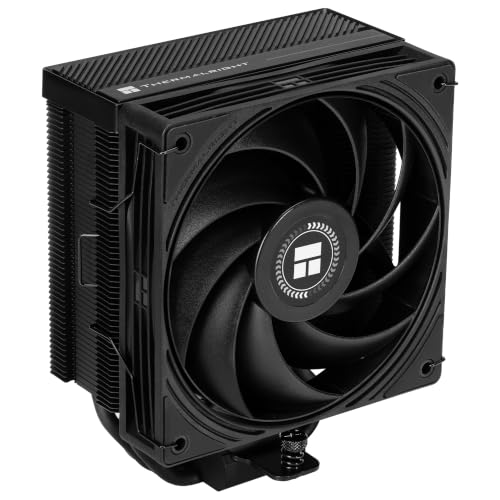
If you want exceptional cooling value without spending a premium, the Thermalright Assassin King 120 SE CPU Air Cooler delivers five anti-gravity heat pipes at an unbeatable entry price. Builders seeking heavy-duty thermal headroom for power-hungry processors should consider the Scythe Mugen 6 CPU Air Cooler, Intel LGA1700 with its high-density fin stack. Pair your silent system with an immersive screen from our gaming monitors guide for a complete desktop experience.
Frequently Asked Questions
What are the Best Single-Tower Air CPU Coolers: Quiet PC Builds in 2026?
The top options for silent builds include the Noctua NH-U12S Redux, Quiet High-Performance and the dual-fan ARCTIC Freezer 36 (Black). These models provide balanced airflow, quiet fluid dynamic bearings, and broad socket compatibility for modern desktop processors.
How do single-tower air coolers maintain low noise levels during heavy gaming?
Single-tower coolers utilize dense aluminum fins and multiple copper heat pipes to distribute heat rapidly away from the CPU. This efficient heat dissipation allows PWM-controlled fans to spin at moderate, quiet speeds rather than ramping up to distracting maximum RPM levels.
Will a 120mm single-tower cooler block tall RGB memory modules?
Most modern single-tower heatsinks use asymmetrical offset designs that position the fin stack away from front RAM slots. This configuration provides 100 percent memory clearance, allowing you to install tall RGB memory sticks without adjusting fan positions.
Are single-tower coolers sufficient for modern multi-core processors?
High-quality single-tower coolers easily handle mid-range to upper-tier desktop processors for gaming, content creation, and general productivity. Models equipped with five or six heat pipes manage thermal spikes effectively when proper case airflow is maintained.
What is the benefit of AGHP heat pipe technology in CPU coolers?
Anti-gravity heat pipe technology ensures efficient capillary liquid circulation inside the copper pipes regardless of mounting direction. This prevents thermal degradation when installing the cooler in vertical desktop towers or horizontal bench cases.
Does adding a second fan in push-pull lower system noise?
A push-pull setup improves airflow through dense fins, allowing both fans to run at lower RPMs to achieve the same cooling result. Running two fans at lower speeds often produces a smoother, less noticeable acoustic profile than running a single fan at full speed.
How often should thermal paste be replaced on an air cooler?
Quality thermal compound typically lasts between three and five years under regular operating conditions before drying out. If you notice CPU temperatures steadily creeping higher over time, cleaning the heatsink base and reapplying fresh thermal paste restores optimal thermal conductivity.