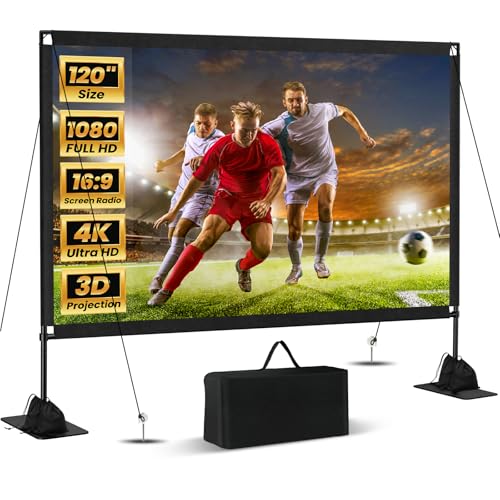
Selecting the right screen transforms backyard viewing into a true theater experience. For most setups, we recommend the 150 inch Projector Screen with Stand because it balances a massive display area with a windproof frame.
If you prefer ultra budget options for casual indoor walls, the Mdbebbron 120 inch Projector Screen 16:9 Foldable offers incredible value. For overall display tech guidelines, check out our guide on Computer Monitors & Displays for color and panel basics.


Best Projector Screens for Movie Nights Buying Guide
Aspect Ratio and Screen Dimensions
Screen size directly impacts viewer immersion, but larger displays require adequate throwing distance from your projector lens. Most modern video content uses a sixteen to nine aspect ratio to match standard widescreen broadcasts.
Choosing a massive diagonal screen without measuring your yard space can result in cramped seating arrangements. Ensure your projector lens can expand to fill the screen surface without losing brightness.
Fabric Material and Surface Gain
Screen fabric dictates how light reflects off the canvas back to your eyes. Standard matte white surfaces with unified gain values distribute light evenly across wide viewing angles.
Multi-layer PVC materials absorb ambient rear light better than thin single-layer fabrics. Upgrading to anti-crease polyester prevents annoying wave distortions across your movie image.
Outdoor Frame Stability and Wind Resistance
Outdoor screens act like large sails when light breezes pass through your backyard. Sturdy aluminum or steel frames must include tie-down ropes, ground stakes, and sandbag anchors.
Lightweight snap-together frames are convenient for travel, but lack stability without ground rigging. For indoor setups where wind is not a factor, simple hanging hooks work well. Learn more about display mounting in our Desktop & External Monitors section.
Setup Time and Assembly Complexity
A quick setup design ensures you spend more time watching movies and less time connecting frame tubes. Push button metal snaps and elastic corded poles speed up assembly significantly.
Tool-free assembly allows a single person to erect the display in minutes. Complex frames with loose screws risk lost parts during night events in the grass.
Portability and Storage Bag Quality
Compact storage makes taking your screen on camping trips or family gatherings effortless. Foldable fabrics pack tightly into padded carrying bags alongside folded frame components.
Heavy duty bags prevent moisture damage and frame scratches during seasonal storage. Check bag dimensions to ensure the packed kit fits easily inside your car trunk.
Front and Rear Projection Capabilities
Dual-sided fabric lets you position the projector behind the screen to keep equipment away from foot traffic. Translucent materials pass light through cleanly without degrading image clarity.
Front projection yields brighter images, but rear projection keeps kids from tripping over cables. Selecting a versatile double-sided screen offers flexibility for tight patio spaces. Readers interested in high resolution displays can review our 4K, 6K & 8K Monitors guide.
How We Evaluated
We evaluated 7 projector screens by analyzing material specifications, assembly mechanisms, and structural stability ratings across the available product data. Our assessment focused on practical usability for indoor and outdoor movie setups.
We examined fabric tension methods, gain performance, wind anchor kits, and carrying convenience. This data-driven approach highlights trade-offs between ultra-portable wall hangings and freestanding frame systems.
Common Mistakes to Avoid
Buying a screen that is too large for your projector brightness is a frequent error. Low lumen projectors produce washed out images when stretched across massive canvas surfaces.
Neglecting wind anchors outdoors can cause physical damage to the frame or screen fabric. Always secure rigging ropes and ground stakes even on calm evenings.
Folding synthetic fabrics while damp leads to mildew growth and surface stains. Allow screen materials to dry completely before packing them away into storage bags.
Ignoring throw ratio dimensions forces viewers to sit too close to the screen. Measure your projection distance before finalizing display height and screen location.
Buying Checklist
- Confirm your projector throw distance matches the selected screen diagonal size.
- Verify the screen aspect ratio matches your preferred 16:9 media format.
- Ensure the package includes outdoor rigging ropes, stakes, or sandbags for stability.
- Check whether your setup requires front or rear projection material flexibility.
- Review total packed dimensions to ensure easy vehicle transportation.
- Verify frame assembly requires no extra tools for field setup.
- Confirm the screen fabric features anti-crease synthetic polyester or multi-layer PVC.
Final Thoughts
Selecting the right screen elevates home cinema events into memorable entertainment nights. For complete versatility and stable outdoor framing, the 150 inch Projector Screen with Stand serves as our top overall recommendation.
Budget conscious buyers who want a lightweight option for wall mounting will appreciate the Mdbebbron 120 inch Projector Screen 16:9 Foldable. If you plan massive gatherings requiring maximum screen area, consider the JWSIT Projector Screen 200 inch for its expansive visual surface.
Pair your screen with high quality source media and clear audio for the best experience. For more insights on display hardware performance, check out our guide to Best HDMI Monitors for Comfort and Value You Can Trust or explore our How To category page.
Frequently Asked Questions
What is the top-rated option among Best Projector Screens for Movie Nights in 2026?
The top choice for overall outdoor stability and display size is the 150 inch Projector Screen with Stand. It combines durable synthetic fabric with full windproofing accessories.
Can I leave an outdoor projector screen outside permanently?
Most portable projector screens are designed for temporary outdoor use during events. Exposure to rain and continuous ultraviolet sunlight degrades the fabric coating and frame joints over time.
How do I remove wrinkles from a foldable projector screen?
Stretching the screen tightly onto its frame naturally pulls out most surface creases. You can also use a low heat garment steamer on the backside of polyester screens.
What is the difference between front and rear projection screens?
Front projection screens reflect light cast from the front of the room back to viewers. Rear projection screens allow light to pass through from behind, concealing projector hardware behind the display canvas.
Is a white or gray projector screen better for backyard use?
White screens offer brighter images and wider viewing angles in low light outdoor environments. Gray screens improve contrast levels in spaces with noticeable ambient street lighting.
Do I need tools to assemble a portable projector screen with stand?
Modern portable screens feature snap-together frames or elastic corded poles requiring zero tools. Frame legs attach easily using hand tightened knobs or metal locking snaps.
How do screen gain levels affect movie picture quality in 2026?
Gain measures how effectively screen fabric reflects light back to the audience. A neutral gain reflects light evenly in all directions, providing consistent brightness across seating positions. For broader panel comparisons, browse our IPS, OLED & LED Panels guide.