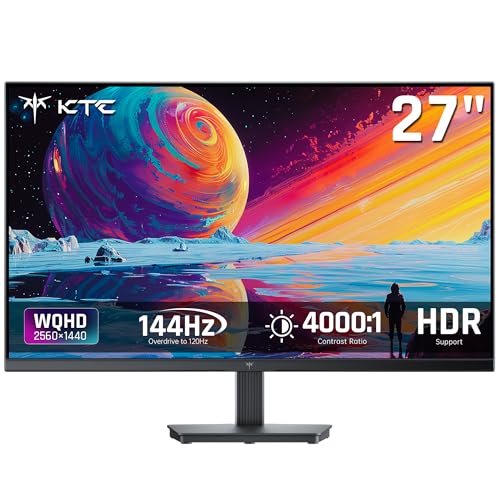

Competitive players and casual adventurers benefit immensely from upgrading their display setup in November 2026. For balanced performance and high contrast, the KTC 27 Inch QHD Computer Monitor stands out as our top recommendation among 5 evaluated screens. Its rich HVA panel and rapid refresh rate provide smooth performance for modern gaming setups, surpassing standard dedicated gaming monitors in sheer visual depth.
Gamers seeking vibrant wide-angle colors or budget flexibility should consider the KTC 27 Inch Computer Monitor with its responsive IPS panel. Those managing tight desk space can look toward smaller QHD alternatives from KTC for maximum clarity.


Best Console Monitors Buying Guide
Resolution and Screen Size Balance
Modern consoles support sharp 1440p output natively, making QHD resolution the ideal standard for desktop setups. Choosing between 24-inch, 27-inch, and 32-inch displays affects the sharpness of text and textures during fast gameplay. Exploring options among high resolution displays helps ensure you find the right pixel density for your viewing distance.
A 27-inch 1440p screen offers an optimal balance of screen real estate and fine detail without taxing your eyesight. While 32-inch screens deliver extra immersion, they slightly lower pixel density compared to smaller panels.
Refresh Rate and 120Hz Console Modes
Both current-generation PlayStation and Xbox systems offer high frame rate modes running at 120Hz in select titles. A monitor supporting at least 120Hz over HDMI allows you to take full advantage of these fluid frame rates. Lower refresh rate displays cap your gameplay at 60 frames per second, missing out on crucial input responsiveness.
Look for displays featuring adaptive synchronization like FreeSync or G-Sync compatibility. These technologies align the refresh cycle of the monitor with frame output, preventing visual tearing and annoying motion stutter during intense sequences.
IPS vs HVA Panel Performance
Panel construction fundamentally shapes your visual experience in dark scenes and cinematic games. HVA panels excel at deep black levels with contrast ratios reaching 4000:1, making them superior for horror titles and dimly lit rooms. In contrast, standard panels may display dark scenes as washed out or dark gray.
IPS panels prioritize color accuracy and wide 178-degree viewing angles across the entire surface. If you play in a brightly lit room or share the screen with friends, an IPS display maintains consistent colors without image degradation.
HDMI and DisplayPort Connectivity
Game consoles connect almost exclusively via HDMI, making robust port selection vital for any gaming workstation. Reliable HDMI monitors with dual HDMI 2.0 ports allow simultaneous connection of a console and a streaming box or computer. This eliminates the tedious process of swapping cables behind your desk every evening.
Ensure the HDMI inputs on your chosen display support high refresh rates at 1440p resolution. Some displays restrict maximum refresh rates to DisplayPort inputs, which limits console frame rates to standard speeds.
Color Gamut Coverage and HDR Performance
Rich color spaces bring fantasy landscapes, racing tracks, and futuristic cities to life. Displays boasting over 100% sRGB coverage and wide DCI-P3 gamut support provide punchy, lifelike color reproduction straight out of the box. Factory calibration reduces the need to manually adjust complex color channels before playing.
HDR10 decoding enhances dynamic highlights in supported console titles. While entry-level monitors do not match premium television backlights, HDR support still adds noticeable depth to sunlight and particle effects.
Eye Comfort and Stand Flexibility
Long gaming sessions place noticeable strain on your eyes, especially in dim evening environments. Displays equipped with flicker-free backlights and hardware blue light reduction maintain visual comfort without severe color distortion. These features prevent headaches and premature eye fatigue during weekend marathons.
Ergonomic adjustability is equally important for maintaining healthy posture during competitive play. A tilt-adjustable stand or standard 100×100 VESA mounting compatibility allows you to position the screen at natural eye level.
How We Evaluated
We analyzed verified technical specifications, panel performance metrics, and manufacturer data across 5 models from KTC. Our assessment focused on practical console compatibility, assessing HDMI bandwidth, native resolution support, and real-world contrast ratios.
Each display was weighed against the specific needs of console players, prioritizing smooth 120Hz refresh rates and eye protection features. We compared trade-offs between IPS color accuracy and HVA contrast depth to provide balanced, practical recommendations.
Common Mistakes to Avoid
Assuming any high refresh monitor supports 120Hz over HDMI is a frequent mistake. Many monitors only achieve their advertised refresh speeds over DisplayPort, which leaves console gamers locked at 60Hz.
Overlooking contrast ratio when playing dark or atmospheric games can lead to disappointment. Standard 1000:1 contrast screens can wash out shadow details, whereas higher contrast panels preserve dark gradients cleanly.
Buying an oversized 1080p display for a desktop setup often results in noticeable pixelation. Sticking to 1440p resolution ensures crisp lines and sharp UI elements on 27-inch and 32-inch screens.
Forgetting to verify audio output options can complicate your setup. Consoles lack traditional 3.5mm audio jacks, so having an audio pass-through port on your monitor is essential for desktop speakers.
Buying Checklist
- Verify that HDMI 2.0 or higher ports support 1440p at 120Hz for your specific console.
- Check whether the panel type is HVA for deep contrast or IPS for wide viewing angles.
- Confirm the screen size matches your desk depth to maintain comfortable viewing distance.
- Ensure the monitor includes a 3.5mm audio out jack for external speakers or headphones.
- Look for FreeSync or adaptive sync compatibility to prevent gameplay screen tearing.
- Check for VESA 100x100mm mounting holes if you plan to use a custom monitor arm.
- Review built-in eye care features like anti-flicker and low blue light filter settings.
Final Thoughts
Choosing the right screen elevates your gaming experience by unlocking smooth frame rates and vibrant imagery. The KTC 27 Inch QHD Computer Monitor is our top overall pick thanks to its incredible 4000:1 contrast ratio and fluid 144Hz panel. It excels in dark gaming environments where visual depth matters most.
If you prefer vibrant wide-angle colors for shared gaming, the KTC 27 Inch Computer Monitor provides outstanding IPS performance. Meanwhile, budget-conscious buyers seeking crisp desktop visuals should opt for the KTC 24 Inch QHD 100Hz Computer Monitor. Exploring general external computer monitors can also provide helpful context on multi-use home setups.
For those who desire total visual immersion on a larger canvas, the KTC 32 Inch 2K Computer Monitor offers expansive screen space with smooth 120Hz support. Selecting the display that matches your room lighting and desk size ensures years of rewarding console gaming.
Frequently Asked Questions
Can you run 120Hz console gaming on Best Console Monitors in 2026?
Yes, modern gaming consoles support 120Hz output at 1440p over HDMI 2.0 connections. You must enable 120Hz performance mode in your console display settings and in supported game menus.
Is 1440p resolution better than 4K for desktop console gaming?
A 1440p monitor provides the sweet spot of crisp visuals and high frame rate performance on desks. While 4K offers higher pixel count, 1440p screens are more accessible and easily handle 120Hz console refresh rates.
How do IPS and VA panels compare for console gaming?
IPS panels offer superior color consistency and wider viewing angles for well-lit rooms. VA and HVA panels provide significantly higher contrast ratios, delivering deeper blacks in atmospheric games. You can explore our guide on panel technology to learn more about display characteristics.
Do console monitors come with built-in speakers?
Some monitors include integrated speakers, but many prioritize slim bezels and rely on audio pass-through ports. A dedicated 3.5mm audio jack lets you connect powered desktop speakers or soundbars directly.
Does HDR make a noticeable difference on Best Console Monitors?
HDR10 support expands dynamic range by preserving highlights and shadow nuances in supported game titles. While desktop monitors do not reach television brightness levels, HDR improves overall visual depth.
What screen size is ideal for a console monitor setup?
A 27-inch display is widely considered the ideal size for standard desktop viewing distances of two to three feet. If you sit further back or want a cinematic feel, a 32-inch monitor offers greater immersion.
Can I connect both a PC and a console to the same monitor?
Yes, monitors equipped with multiple HDMI ports and a DisplayPort allow seamless multi-device connection. You can keep your PC on DisplayPort and your console on HDMI, toggling inputs effortlessly.
Is FreeSync supported on gaming consoles?
Xbox consoles natively support FreeSync over HDMI to eliminate screen tearing across compatible displays. PlayStation systems utilize standard HDMI Variable Refresh Rate on supported hardware to maintain smooth frame pacing.









