

Navigating dimly lit highways and dark city streets requires exceptional video clarity to capture critical road details without harsh headlight glare. We evaluated 7 options in November 2026 to identify models that deliver crisp low-light footage and reliable incident documentation. The ROVE R2-4K Dual Dash Cam Front and Rear stands out as the leading choice for drivers who want premium night performance paired with straightforward operation.
For comprehensive vehicle surveillance covering the cabin and rear bumper, the Vantrue N4 Pro S 4K 3 Channel Dash Cam provides advanced multi-angle coverage. Drivers seeking helpful setup guidance can consult our step-by-step automotive technology tutorials to optimize recording angles before their next trip. Both selections ensure high-contrast evening recordings when unpredictable road incidents happen.




Best Dash Cameras with Night Vision: Sharp Dark Recordings Buying Guide
Image Sensor Technology and Low-Light Sensitivity
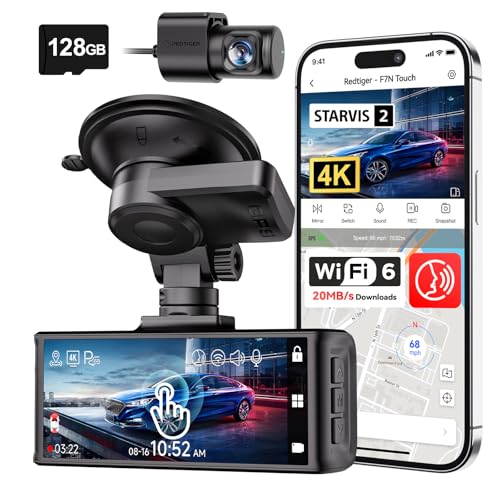
The image sensor serves as the primary hardware foundation for capturing clean video in low-light environments. Modern units equipped with Sony STARVIS 2 sensors capture significantly more ambient illumination than older image sensors while reducing unwanted digital noise. Selecting an advanced sensor ensures that license plates and street signs remain legible even on rural roads without streetlights.
Older sensors often struggle with grainy artifacts that obscure vital incident details when ambient light drops. Premium sensors expand the dynamic range and sensitivity across every individual pixel to preserve clarity during nighttime travel. Investing in superior sensor hardware prevents blurred footage that could complicate insurance claim assessments after an unexpected evening collision.
Lens Aperture and Optical Glass Elements
A wide lens aperture allows maximum light to reach the internal recording sensor during dark drives. Lenses with an f/1.5 or f/1.6 aperture rating gather substantially more light than narrower f/2.0 alternatives, brightening dark road shoulders. Multi-layer glass lenses also reduce optical distortions and maintain crisp edge-to-edge sharpness across the entire field of view.
Plastic lens elements can warp over time from intense windshield sun exposure, resulting in hazy nighttime recordings. Multi-element optical glass retains structural stability and sharp focus across extreme cabin temperature shifts throughout the year. Reviewing high-definition clips on high resolution computer displays quickly reveals the visual advantage of multi-layer glass optics.
High Dynamic Range and Exposure Balancing
High Dynamic Range processing combines multiple exposure levels simultaneously to neutralize harsh oncoming headlight glare. Without robust HDR tuning, reflective license plates frequently appear as overexposed white rectangles on nighttime video recordings. Proper exposure balancing ensures that both dark roadside ditches and bright taillights remain clear within the same frame.
Wide Dynamic Range algorithms work alongside HDR to stabilize rapid transitions when entering dark tunnels or shaded underpasses. This automated adjustment prevents temporary video blackout during sudden illumination changes in dense traffic areas. Reliable dynamic range processing guarantees consistent visual evidence when navigating complex municipal intersections after dusk.
Resolution and Multi-Channel Camera Coverage
Higher recording resolution preserves fine spatial details when pausing video footage to inspect distant traffic numbers. While single-channel cameras cover the forward roadway, multi-channel configurations add rear and interior cabin monitoring for complete vehicle protection. Selecting multi-channel setups ensures comprehensive video evidence if a rear-end impact or side-swipe collision takes place.
Analyzing detailed camera specifications helps buyers match recording capabilities with their daily driving routines. The comparison table below highlights how primary technical attributes influence overall nighttime recording quality and system performance.
| Configuration | Resolution Profile | Night Performance Advantage | Primary Application |
|---|---|---|---|
| Single Channel | 4K UHD Front | Concentrated processing power for maximum forward clarity | Daily commuting and simple installation |
| Dual Channel | 4K Front + 1080P Rear | Balanced front and rear evidence with synchronized timestamps | Complete road coverage for everyday drivers |
| Triple Channel | 4K Front + 2.5K Rear + Cabin | Surrounds vehicle perimeter and records interior passenger cabin | Rideshare operators and commercial fleets |
| Dual Front Lens | Telephoto + Wide + Rear | Optical zoom isolates distant plates while retaining wide view | Highway driving and long-distance plate capture |
Wireless Connectivity and Data Transfer Speeds
Modern dash cameras utilize dual-band Wi-Fi modules to simplify video management directly through smartphone applications. Operating on 5GHz or 5.8GHz wireless bands allows download speeds reaching up to 20 megabytes per second. Rapid transfer speeds eliminate tedious delays when retrieving urgent accident footage at the roadside for law enforcement review.
Older 2.4GHz connections often suffer from signal interference and slow download rates when transferring large video files. Upgrading to high-speed wireless components ensures seamless firmware updates and rapid video sharing without removing memory cards. To inspect detailed file properties on desktop setups, consult our guide to high quality display panels for clear evidence inspection.
Power Supplies: Supercapacitors Versus Batteries
Windshields absorb tremendous solar heat during summer afternoons and freeze rapidly during harsh winter nights. Supercapacitors handle these wide thermal swings safely without the swelling, leakage, or fire risks associated with lithium batteries. Choosing a supercapacitor-powered camera ensures uninterrupted operation across extreme climate conditions over many years of service.
Supercapacitors provide reliable auxiliary power to finalize and save the active video clip during sudden electrical disconnections. This failsafe mechanism prevents file corruption when a severe collision cuts primary power from the vehicle battery. Dependable power hardware protects your most important video evidence during critical accident scenarios.
How We Evaluated
Our evaluation methodology centered on analyzing verified technical specifications, sensor architectures, and optical parameters across 7 models from REDTIGER, ROVE, galphi and more. We examined real-world performance metrics including aperture ratings, dynamic range capabilities, wireless transfer throughput, and operating temperature tolerances. This systematic approach ensures an objective assessment of how each device handles difficult low-light driving scenarios.
We also reviewed hardware reliability standards by comparing supercapacitor designs against conventional power systems across various vehicle configurations. Data-driven comparisons of multi-channel recording loads, memory card endurance requirements, and app usability informed our overall ratings. This transparent framework helps drivers choose dependable automotive security systems tailored to their specific travel habits.
Common Mistakes to Avoid
Prioritizing high resolution figures while neglecting image sensor quality often leads to disappointing nighttime recording results. A basic 4K camera lacking HDR tuning will overexpose license plates under headlights, rendering numbers unreadable. Always verify that sensor sensitivity and optical aperture match the demands of dark driving conditions.
Installing standard consumer memory cards instead of high-endurance storage creates frequent file corruption and recording failure. Continuous video loop recording places heavy write demands on memory cards that standard storage media cannot sustain. Always pair your camera with a high-endurance U3 card designed specifically for automotive dash cameras.
Relying on internal lithium batteries in regions with extreme summer heat frequently results in device overheating and premature failure. Supercapacitor models offer superior thermal resilience and maintain long-term reliability on sun-exposed windshields. Furthermore, neglecting to install an optional hardwire kit prevents 24-hour parking surveillance from monitoring your vehicle when parked.
Buying Checklist
- Confirm the front camera utilizes a high-sensitivity sensor like Sony STARVIS 2 for clear low-light recording.
- Check that the optical lens features a wide aperture of f/1.5 or f/1.6 with multi-layer glass elements.
- Verify hardware-level HDR or WDR support to prevent license plate washout from oncoming vehicle headlights.
- Ensure the unit utilizes a heat-resistant supercapacitor rather than a volatile lithium-ion battery.
- Select dual-band 5GHz or 5.8GHz Wi-Fi capabilities for rapid wireless video downloads to your smartphone.
- Determine whether your driving habits require single-channel, dual-channel, or 3-channel vehicle coverage.
- Purchase a dedicated high-endurance U3 micro SD card with adequate write endurance for 4K video streams.
- Verify parking mode compatibility and obtain a dedicated hardwire kit if 24-hour parked surveillance is desired.
Final Thoughts
Selecting the ideal recording system depends on your regular commuting schedule, vehicle size, and required coverage zones. The ROVE R2-4K Dual Dash Cam Front and Rear delivers an outstanding balance of low-light sensitivity, dual-channel coverage, and intuitive wireless file sharing for everyday motorists. For drivers seeking an economical entry point without sacrificing high resolution, the galphi 4K Dash Cam Front, 5GHz WiFi offers compact performance and quick smartphone connectivity.
Commercial drivers and rideshare operators will appreciate the comprehensive 360-degree security provided by the Vantrue N4 Pro S 4K 3 Channel Dash Cam. Meanwhile, long-distance highway travelers can rely on the REDTIGER ZP1 Telephoto+Wide Dash Cam, 4X Zoom to capture distant license plates through dedicated optical zoom. Reviewing your captured video on high resolution computer monitors ensures every fine detail remains clearly visible during incident investigations.
Investing in dependable recording technology gives you undeniable visual evidence and peace of mind during nighttime travel. Drivers looking to expand their technology knowledge can explore our practical automotive and device guides for additional setup tips. Choose the configuration that matches your driving requirements to stay protected on every journey.
Frequently Asked Questions
How does STARVIS 2 technology improve Best Dash Cameras with Night Vision: Sharp Dark Recordings in 2026?
STARVIS 2 sensors feature enhanced pixel architecture that captures more ambient light while minimizing electronic image noise. This hardware advancement delivers broader dynamic range, allowing the camera to resolve dark road shoulders without washing out illuminated license plates. The result is sharper, more reliable incident documentation during nighttime drives.
Why is HDR essential for nighttime license plate readability?
High Dynamic Range balances extreme exposure variations between dark roadways and highly reflective retroreflective license plates. Without HDR processing, direct headlight illumination bounces off plates and turns them into illegible white blocks on video. HDR combines high and low exposures to ensure embossed characters remain readable.
What is the advantage of 5GHz Wi-Fi over 2.4GHz in modern dashcams?
A 5GHz or 5.8GHz Wi-Fi connection delivers data transfer speeds up to four times faster than standard 2.4GHz bands. This high bandwidth allows you to download large 4K video files to your smartphone in seconds rather than minutes. Faster transfers simplify roadside evidence sharing with law enforcement or insurance adjusters.
Why should I choose a supercapacitor dash camera instead of a battery model?
Supercapacitors withstand severe heat and freezing cabin temperatures without swelling, degrading, or posing thermal safety hazards. They provide reliable power to safely finalize video files when vehicle ignition shuts off unexpectedly. This durability makes supercapacitor dash cameras significantly more reliable for long-term windshield mounting.
Can Best Dash Cameras with Night Vision: Sharp Dark Recordings record while my car is parked?
Yes, most advanced dash cameras offer 24-hour parking surveillance through collision detection, motion sensing, or time-lapse recording modes. To enable continuous parking surveillance when the engine is off, you must install a compatible hardwire kit connected to your vehicle fuse box. This constant connection protects your parked car against hit-and-run incidents.
How does loop recording manage storage on memory cards?
Loop recording divides video capture into continuous segments of one, two, or three minutes. When the micro SD card reaches full capacity, the camera automatically overwrites the oldest unlocked file to continue recording. Built-in G-sensors automatically lock emergency collision files to prevent them from being overwritten.
How should I inspect high-resolution dashcam footage on desktop computers?
Reviewing 4K and 2.5K video recordings on dedicated high definition computer displays ensures you can zoom into small details like vehicle badges and distant street signs without pixelation. Using manufacturer GPS player software allows you to view synchronized vehicle speed, route coordinates, and multi-angle camera feeds on one screen.
What micro SD card specifications are required for 4K video recording?
High-resolution dash cameras require high-endurance memory cards rated at Class 10, U3, and V30 speeds. These cards are engineered to withstand continuous write cycles and elevated operating temperatures without dropping video frames. Using standard consumer-grade memory cards can cause file corruption and camera recording errors.









