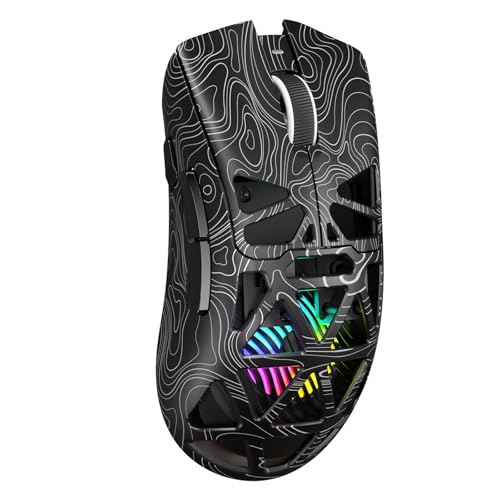

When choosing a mouse for console adapters, onboard profile memory and high DPI capability remain critical for translating stick movements smoothly. The Logitech G PRO X2 SUPERSTRIKE Wireless stands out as our top overall recommendation due to its ultra-responsive HERO 2 sensor and extensive customization options. Gamers who want elite competitive tracking while tweaking their setup on gaming monitors will appreciate its rapid trigger responsiveness and lightweight chassis.
For players seeking fantastic performance at a budget friendly price point, the Logitech G305 Lightspeed Wireless Gaming Mouse delivers exceptional value with its durable mechanical build. Meanwhile, the feature-packed Aula SC620 Wireless Gaming Mouse provides budget flexibility with dedicated macro functionality and versatile tri-mode connectivity across 3 top models evaluated in October 2026. You can quickly jump to our recommended pick below to upgrade your console precision.


Best Gaming Mouse for XIM4 Buying Guide
Onboard Memory and Profile Storage
Console translation adapters do not run desktop configuration drivers natively while connected directly to your video game console. Therefore, your peripheral must store assigned DPI levels and button layouts directly to internal hardware memory using PC software before connecting to the adapter.
Mice lacking internal profile memory revert to default factory settings once disconnected from a computer system. Investing in a unit with robust onboard memory ensures your sensitivity curves and keybinds stay saved during intense match play.
High DPI and Sensor Precision
Adapters function by converting mouse movements into right-stick controller telemetry for target tracking on screens and external desktop displays. Setting a higher hardware DPI allows the adapter engine to process finer spatial increments, minimizing jitter during slow aiming movements.
Modern sensors reaching 12,000 DPI to 44,000 DPI provide massive headroom for smooth translation. You should look for optical sensors with high inches-per-second tracking speed to handle fast hand sweeps without spin-outs. Proper surface calibration also prevents erratic cursor tracking across various mousepads.
Polling Rate and Latency
Polling rate determines how many times per second your pointer reports movement coordinates to the host device. A standard 1000Hz report rate delivers 1ms responses, ensuring immediate signal transfer through the adapter interface.
While higher polling rates up to 8000Hz offer ultra-dense data streams, ensure your adapter firmware handles high-rate signals gracefully. Consistent signal delivery without dropped packets remains more vital than pure numerical rate limits.
Weight and Form Factor
Chassis weight dictates how easily you can initiate rapid flicks and micro-adjustments during fast gameplay. Lightweight designs ranging from 67g to 95g reduce wrist fatigue during long multiplayer gaming sessions.
Grip style compatibility also determines long-term comfort whether you prefer palm, claw, or fingertip handling. Ergonomic contoured shells support palm grippers, whereas symmetrical lightweight shells accommodate claw and fingertip styles effectively. Choosing the correct shape prevents hand cramping during continuous play.
Connection Stability and Power Management
Wireless technology has reached competitive parity with traditional wired setups through dedicated 2.4GHz USB receivers. Ultra-fast wireless connections provide clutter-free movement without latency penalties or cable drag across your desk.
Battery life requirements vary between rechargeable internal lithium units and standard AA cell power sources. Efficient power management modes allow mice to run for hundreds of hours, keeping your gaming setup active without sudden power drops.
| Feature | Logitech G305 | Aula SC620 | Logitech G PRO X2 |
|---|---|---|---|
| Max DPI | 12,000 DPI | 12,000 DPI | 44,000 DPI |
| Weight | 96g | 67g | Lightweight Thin-Wall |
| Connection | 2.4GHz Wireless | Tri-Mode (2.4G/BT/Wired) | LIGHTSPEED Wireless |
| Battery Source | 1x AA Battery | Rechargeable | Rechargeable (POWERPLAY) |
How We Evaluated
We evaluated these products by analyzing key performance parameters, including sensor precision metrics, onboard profile storage capabilities, and wireless transmission stability. Our evaluation focused on objective manufacturer specifications and technical compatibility with hardware console adapters.
We compared physical weight distributions, DPI customization ranges, and software profile management across the top picks. This data-driven approach highlights options that offer reliable tracking, durable build quality, and excellent ergonomic value.
Common Mistakes to Avoid
One common mistake is buying a peripheral without onboard memory storage to save custom profiles. Without onboard memory, your custom DPI settings reset when connected to a console adapter, rendering adjustments ineffective.
Another frequent error is running low DPI settings on high-sensitivity adapter profiles, which introduces pixel skipping. Setting your hardware sensor to a high native DPI level gives the translation engine better precision for smooth aiming.
Lastly, players often overlook connection stability when choosing wireless models for competitive setups. Ensure your 2.4GHz dongle maintains a clear line of sight to avoid signal interference from nearby electronic devices.
Buying Checklist
- Confirm the hardware includes onboard memory to save DPI profiles without software drivers.
- Verify maximum sensor tracking speed reaches at least 400 IPS for rapid movement precision.
- Check that the unit supports 1000Hz polling rate for 1ms response speeds.
- Choose a physical weight class under 100g to minimize hand fatigue during play.
- Ensure wireless options utilize low-latency 2.4GHz connectivity rather than Bluetooth for gaming.
- Review software driver compatibility on PC to configure buttons prior to adapter connection.
- Select an ergonomic shape matched to your specific grip style.
Final Thoughts
Selecting the right peripheral for console aim translation transforms your gaming accuracy and movement fluidness. The flagship Logitech G PRO X2 SUPERSTRIKE Wireless represents our top overall recommendation for players demanding high end sensor precision and haptic trigger customizability.
If you want dependable performance on a budget, the Logitech G305 Lightspeed Wireless Gaming Mouse offers massive battery efficiency and proven HERO sensor accuracy. Alternatively, the lightweight Aula SC620 Wireless Gaming Mouse provides exceptional versatility with dedicated macro buttons and multi-device connection modes.
Take time to review hardware specs and onboard software features before finalizing your console gaming setup. You can explore more setup advice in our how-to guides section to build your ideal gaming environment.
Frequently Asked Questions
What is the top-rated option for the Best Gaming Mouse for XIM4 in 2026?
The top-rated choice for 2026 is the Logitech G PRO X2 SUPERSTRIKE Wireless due to its industry-leading HERO 2 sensor and rapid actuation customization. It delivers exceptional sub-pixel tracking clarity necessary for console translation engines.
Why is high DPI important for console mouse adapters?
High DPI allows console adapters to convert fine hand movements into smooth controller stick telemetry. Operating at higher hardware DPI levels eliminates micro-stuttering during subtle aiming adjustments.
Do wireless gaming mice introduce input lag on console adapters?
Modern 2.4GHz wireless connections deliver 1ms report rates identical to traditional wired connections. As long as you use the dedicated USB wireless receiver, latency remains indistinguishable from wired setups.
Why does onboard memory matter when choosing a mouse?
Console adapters do not run desktop driver software natively during console play. Onboard memory allows your peripheral to retain custom DPI stages and keybinds directly on the device hardware.
Can I use a Bluetooth mouse with a console adapter?
Bluetooth connections generally introduce noticeable input latency and inconsistent polling rates unsuitable for competitive gaming. You should always connect using a 2.4GHz wireless receiver or a direct USB cable.
How does mouse weight impact aiming precision?
Lighter models under 70 grams allow faster flick movements and reduce wrist strain during long sessions. Heavier options provide extra stability for players who prefer deliberate control movements.
Should I pair my setup with dedicated HDMI displays?
Pairing low latency peripherals with high refresh rate screens optimizes your visual feedback loop. You can learn more about display response times in our HDMI monitors guide.