The Klein Tools RT250 GFCI Outlet Tester with LCD stands as our top pick among Best Voltage Testers for Wall Outlets: Safe Wiring Checks in September 2026. Its clear backlit screen immediately displays circuit voltage and fault conditions while measuring ground fault interruption speeds with exceptional precision.
If you want a versatile multi-tool bundle, we evaluated 7 top options and found the Klein Tools 80025 Outlet Tester Kit with GFCI delivers outstanding practical utility. You can explore our collection of How To guides to learn more about protecting your sensitive electronics from power issues.


Best Voltage Testers for Wall Outlets: Safe Wiring Checks Buying Guide
Voltage Range and Sensitivity Adjustments
Standard non-contact pens detect alternating current electromagnetic fields across varying operational thresholds. Basic sensors typically operate within a fixed 90 to 1000 volt range, which works reliably for standard residential receptacles.
Dual-range detectors expand this coverage down to 12 or 24 volts for low-voltage applications like thermostats and doorbell wiring. Selecting a tool with adjustable sensitivity helps you pinpoint live wires in crowded junction boxes without registering false positives from adjacent lines.
When you set up home office equipment, verifying clean power delivery prevents unexpected hardware resets. You can connect your gear alongside recommendations from our Desktop & External Monitors guide for a dependable daily workstation.
GFCI Breaker Testing and Response Measurement
Ground fault circuit interrupter outlets safeguard moisture-prone areas like kitchens, bathrooms, and outdoor patios by cutting power during ground leakage. A dedicated test button on your plug-in tester creates a controlled current leak to verify that the internal breaker trips instantly.
Advanced models display the exact trip duration in milliseconds directly on their digital readout. Standard residential codes require interruption within specific thresholds to prevent severe injury, making trip timing a valuable diagnostic metric for older installations.
Visual Indicators and LCD Readouts
Traditional plug testers rely on three neon lights that illuminate in varying combinations to signal wiring status. While functional, interpreting those patterns requires consulting a printed reference chart that can be difficult to read in dim workspaces.
Modern testers incorporate backlit LCD screens that spell out conditions like open ground, open neutral, or reverse polarity in plain text. They also display real-time voltage measurements, allowing you to identify brownouts and overvoltage conditions before plugging in expensive hardware.
Electrical Safety Ratings and Insulation
Measurement Category ratings, designated as CAT II, CAT III, or CAT IV, define the transient overvoltage a tool can withstand safely. Residential branch circuits require at least CAT II 300V certification, while main service panels demand CAT III 600V or CAT IV ratings.
Durable double-insulated plastic enclosures protect the user against accidental arc flashes and direct shock hazards. Always check that your voltage tester carries verified safety certifications from recognized testing authorities before working near live electrical panels.
Multi-Tool Kit Versatility
Combining a non-contact sensor pen with a dedicated 3-wire plug-in receptacle tester delivers comprehensive troubleshooting capability. The non-contact pen checks exposed cables and switch terminals, while the plug tester verifies internal socket wiring within seconds.
Investing in a coordinated kit saves money compared to buying individual tools separately while ensuring consistent build quality across your diagnostic gear. High-quality kits often include protective storage pouches and specialized low-voltage DC detection probes for automotive or low-voltage circuits.
| Tester Type | Primary Application | Key Safety Feature | Optimal User |
|---|---|---|---|
| Digital Receptacle Plug | 3-Wire Socket & GFCI Testing | Millisecond Trip Display & Auto-Hold | Homeowners & Inspectors |
| Non-Contact Pen | Cable, Switch & Breaker Tracing | CAT IV Insulation & Audible Beepers | Electricians & DIYers |
| Combined Electrical Kit | Full Residential Diagnostics | Dual-Range AC/DC Sensing | Maintenance Techs |
How We Evaluated
We evaluated the 7 featured diagnostic tools by analyzing manufacturer technical data sheets, safety compliance certificates, and structural build specifications. Our research compared critical parameters including AC voltage operating ranges, GFCI test currents, response indicators, and drop-resistant housing materials.
We also cross-referenced real-world feedback from homeowners and trade professionals to assess display clarity in poorly lit utility areas and ergonomic comfort during repeated outlet inspections. This objective data analysis highlights reliable choices across various residential troubleshooting scenarios.
Common Mistakes to Avoid
Relying on a dead non-contact pen without conducting a live circuit check first is a dangerous oversight. Always test your pen against a known live outlet before and after inspecting an unknown circuit to ensure its internal batteries and sensor are functional.
Pressing the GFCI test button on an ungrounded or standard circuit can produce misleading results or trip upstream breakers unexpectedly. GFCI testing requires a verified ground path with sufficient fault current to operate the protective mechanism accurately.
Ignoring low voltage readings on your digital display is another frequent error. Sockets delivering significantly less than 110 volts AC can damage motorized appliances and sensitive electronics over extended operating periods.
Buying Checklist
- Verify the tester matches your target electrical voltage range, such as 90V to 1000V AC for standard residential lines.
- Confirm the receptacle tester includes a dedicated GFCI test button rated for at least 5mA leakage current.
- Check for an intuitive backlit LCD screen or high-intensity LED indicators for working in dark rooms.
- Ensure the device carries formal safety compliance certifications such as CAT II 300V or CAT III 600V.
- Look for an auto-hold function that preserves voltage readings when inspecting low or awkwardly placed wall sockets.
- Select a model with both audible alarms and visual illumination to confirm live current in loud environments.
- Choose a multi-piece kit if you need to test bare wiring, light switches, and wall receptacles simultaneously.
Final Thoughts
Maintaining safe home wiring requires reliable diagnostic tools that deliver fast, unambiguous readings. The Klein Tools RT250 GFCI Outlet Tester with LCD earns our top overall recommendation for its digital voltage screen and precise GFCI trip timing. If you want a complete toolkit, the Klein Tools 80025 Outlet Tester Kit with GFCI bundles non-contact sensing with socket analysis.
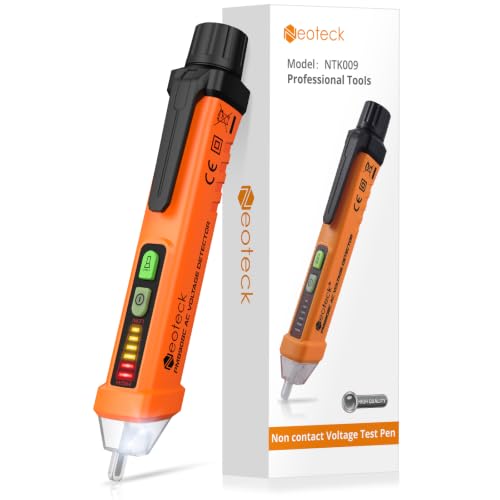
Budget-conscious homeowners will appreciate the simplicity and broad sensing range of the Neoteck Non Contact Voltage Detector 12-1000V AC. Meanwhile, technicians needing extreme durability should look at the Fluke 1AC II VoltAlert Non-Contact Voltage Tester for its continuous self-test technology and CAT IV safety rating.
Equipping your toolbox with the right diagnostic gear gives you peace of mind before starting any home renovation or workstation upgrade. Check our guide on best quality monitors for comfort and value you need to ensure your delicate desktop hardware stays protected by stable power.
Frequently Asked Questions
What makes a digital outlet tester better than a three-light plug tester?
Digital outlet testers feature LCD screens that display actual voltage numbers and plain-English fault descriptions. This eliminates the guesswork of interpreting complex three-light patterns in poorly illuminated spaces.
Can Best Voltage Testers for Wall Outlets: Safe Wiring Checks detect open neutral faults?
Yes, quality receptacle testers immediately detect open neutral, open ground, and reversed hot wiring configurations. Identifying an open neutral is essential because it can cause severe voltage imbalances that damage connected electronics.
How does a non-contact voltage tester detect electrical current through insulation?
Non-contact voltage detectors sense the electromagnetic field generated by alternating current flowing through insulated conductors. When the tip enters this field, the internal sensor triggers a visual light and an audible beeper without touching live metal.
What is the top-rated option among Best Voltage Testers for Wall Outlets: Safe Wiring Checks in 2026?
The Klein Tools RT250 GFCI Outlet Tester with LCD is widely recognized as the top choice for residential socket testing in 2026. Its large backlit display and ground fault trip time readout provide professional diagnostic accuracy for any homeowner.
Will a GFCI tester work on an ungrounded 2-wire electrical outlet?
A plug-in GFCI tester requires an intact equipment grounding conductor to simulate a ground fault leak and trip the breaker. On ungrounded 2-wire outlets, you must use the built-in test and reset buttons directly on the GFCI receptacle body.
What does CAT rating mean when shopping for electrical testers in 2026?
CAT ratings indicate the measurement category and peak transient voltage that an electrical instrument can safely tolerate. A CAT III 600V rating offers strong protection for residential distribution panels, while CAT II is suited for standard wall sockets.
Can I use a residential voltage tester on low-voltage electronic equipment?
Standard outlet testers and AC pens are designed for high-voltage residential alternating current between 90 and 1000 volts. For low-voltage computer components or DC circuits, check our How To tutorials to choose specialized multimeters.
How often should I replace the batteries in my voltage detector pen?
You should inspect and change batteries annually or as soon as the low-battery indicator illuminates on your device. Weak batteries can decrease sensor sensitivity, potentially leading to dangerous false-negative readings on live circuits.