When selecting the Best 2.4 GHz Routers for Office environments in September 2026, long range signal stability and multi-device capacity take top priority. The TP-Link Dual-Band BE3600 Wi-Fi 7 Router delivers exceptional coverage across physical obstacles while serving modern office hardware effectively.
For budget-conscious workspaces needing straightforward deployment, the TP-Link AC1200 WiFi Router Dual Band offers reliable daily performance without high complexity. You can also explore our how-to guides on office setup for broader hardware integration ideas.


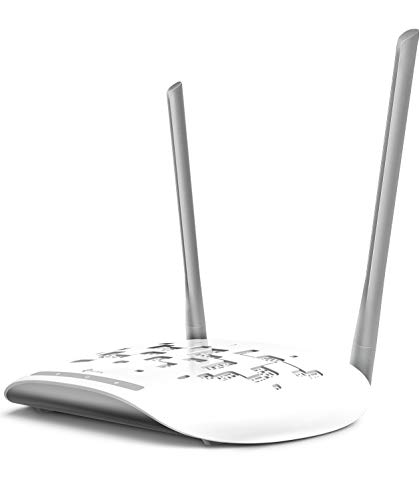


Best 2.4 GHz Routers for Office Buying Guide
Signal Range and Physical Obstacle Penetration
The 2.4 GHz frequency remains indispensable for office environments because lower radio frequencies travel farther and pass through thick drywalls more effectively than 5 GHz bands. Selecting a router with high gain antennas ensures consistent wireless signals reach perimeter desks and remote conference rooms.
When evaluating signal range, check the placement of external omnidirectional antennas versus internal beamforming arrays. Routers with directional beamforming focus wireless energy toward active client devices, which reduces dead spots across expanded office floor plans.
Upgrading your wireless infrastructure pairs naturally with improving workstation ergonomics. Pairing reliable network connections with best external computer monitors for work comfort helps maintain uninterrupted productivity throughout demanding business schedules.
Wireless Speed and Channel Bandwidth
Standard 2.4 GHz networking tops out at legacy N300 speeds on older hardware, while modern WiFi 6 and WiFi 7 routers utilize advanced QAM modulation to push 2.4 GHz throughput over 600 Mbps. Higher bandwidth limits allow simultaneous cloud backups, voice calls, and routine file sharing.
Office locations frequently suffer from dense radio congestion due to neighboring routers using overlapping 2.4 GHz channels. Modern routers automatically scan and switch between channels 1, 6, and 11 to avoid interference from adjacent business units.
Device Capacity and Multi-User Handling
A commercial workspace connects dozens of smartphones, laptops, smart printers, and security cameras simultaneously. Traditional single-user routers queue data sequentially, causing noticeable latency whenever multiple employees transfer large files at once.
Routers equipped with MU-MIMO and OFDMA technologies divide wireless channels into smaller sub-carriers to transmit data to multiple endpoints concurrently. Choosing a unit built for high client density prevents network slowdowns during peak office hours.
Wired Ethernet Ports and LAN Throughput
Wireless coverage handles mobile devices, but desktop computers and network storage arrays depend on stable wired connections. Look for routers featuring full Gigabit or 2.5 Gbps Ethernet ports to handle internal server transfers without bottlenecking.
If your office relies on multi-monitor workstations, connecting your equipment via wired LAN ensures maximum stability. Pairing fast network links with dedicated desktop and external display guides creates a clean, efficient workplace layout.
Network Security and Guest Isolation
Protecting sensitive corporate data requires robust router security standards such as WPA3 encryption and isolated guest networks. A secondary guest network allows visitors and clients to access the internet without granting access to internal file servers.
Many commercial routers offer integrated threat detection and automated firmware updates. Automated security protections block malicious incoming traffic at the perimeter, maintaining workplace network integrity without requiring dedicated IT supervision.
Power over Ethernet and Flexible Deployment
Certain office configurations require installing access points on ceilings or hallway walls where wall outlets are unavailable. Passive PoE support allows routers or access points to receive power and network data over a single network cable.
Utilizing PoE injection simplifies office expansion and keeps cable clutter minimal around executive desks. Flexible mounting options help administrators position wireless hardware in elevated locations for optimal signal propagation.
How We Evaluated
We analyzed 10 models within the $21.99 – $159.99 price range, reviewing hardware specifications, antenna designs, and throughput ratings provided across leading brands like TP-Link, MikroTik, ASUS and more. Our assessment focused on real-world office requirements including device capacity, signal penetration, and admin controls.
By matching manufacturer specifications against typical small business network demands, we identified key operational trade-offs between entry level wireless access points and advanced dual-band routers. This comparative approach highlights balanced options built for long-term daily reliability.
Common Mistakes to Avoid
Overlooking total device capacity is a frequent error when buying entry-level networking gear for a growing workforce. Installing a consumer router rated for few devices leads to dropped connections once smart office hardware accumulates.
Ignoring physical router placement often creates artificial dead zones even with powerful external antennas. Placing a router inside a metal cabinet or near heavy concrete pillars severely degrades 2.4 GHz signal range across office rooms.
Failing to isolate guest traffic exposes internal business servers to unvetted personal devices. Always configure a dedicated guest SSID with restricted access privileges during initial setup to protect sensitive corporate assets.
Buying Checklist
- Verify that the router supports WPA2 or WPA3 security protocols for business data protection.
- Confirm the number of physical Gigabit or 2.5 Gbps Ethernet ports needed for desktop workstations.
- Check maximum 2.4 GHz bandwidth ratings to match your workplace internet service plan.
- Ensure the router includes guest network isolation features for visiting client access.
- Review antenna configuration and beamforming capabilities for multi-room coverage.
- Determine whether passive Power over Ethernet is required for ceiling or wall mounting.
- Verify app or web management features for straightforward remote administration.
Final Thoughts
Selecting the right networking hardware keeps workplace operations smooth and protects daily productivity. For top performance and future proofing, the TP-Link Dual-Band BE3600 Wi-Fi 7 Router delivers exceptional multi-gigabit speeds and expansive device handling across busy offices.
If your office requires straightforward connectivity on a modest budget, the TP-Link AC1200 WiFi Router Dual Band offers solid dual-band range without extra setup complexity. For expanding existing wired infrastructure, the TP-Link TL-WA801N, 2.4Ghz 300Mbps WiFi Access provides flexible mounting and PoE operation.
Complementing a stable network with best HDMI monitors for office workstations ensures your entire team remains productive. Review your spatial layout and client count to choose the setup that fits your business needs in 2026.
Frequently Asked Questions
Why choose Best 2.4 GHz Routers for Office setups over 5 GHz only options in 2026?
The 2.4 GHz frequency provides superior range and wall penetration compared to higher frequency bands. Offices with multiple rooms or thick partition walls benefit from 2.4 GHz signals that reach distant workstations reliably.
How many devices can a standard 2.4 GHz office router support simultaneously?
Basic 2.4 GHz routers support 15 to 25 active connections, while modern WiFi 6 and WiFi 7 routers handle over 60 devices using MU-MIMO technology. Selecting hardware matched to your workforce prevents congestion.
Can 2.4 GHz routers handle HD video conferencing and cloud calls?
Yes, modern 2.4 GHz routers delivering over 300 Mbps easily manage voice and video calls. Quality of Service features can prioritize video conference traffic over background downloads for seamless performance.
What is the difference between a standalone access point and a full router?
A standalone access point expands wireless coverage on an existing wired network without performing routing functions. A full router manages IP allocation, firewall security, and internet gateway connections for the entire office.
Does wall placement affect 2.4 GHz wireless signal coverage in offices?
Elevating your router away from floor level and metal partitions significantly improves signal distribution. Central ceiling or high wall placement allows omnidirectional antennas to broadcast evenly across workspaces.
Is WPA3 security necessary for small business 2.4 GHz networks in 2026?
WPA3 encryption provides enhanced defense against brute-force password guessing and data sniffing on local wireless links. Upgrading to WPA3 supported routers improves security when employee laptops exchange confidential files.
How does channel width impact 2.4 GHz router performance?
Using 20 MHz channel widths reduces interference in crowded office buildings, whereas 40 MHz channels offer higher raw speeds in isolated environments. Selecting 20 MHz often yields more stable office connections. You can also review high resolution display options to complete your office tech setup.