Broadcasters who run encoding software alongside fast-paced titles need balanced memory with proven reliability. For most creators, G.SKILL Trident Z Neo Series DDR4 RAM (XMP) delivers optimized speed profiles and tight latency that keep broadcast frames stable. This kit provides the bandwidth necessary to prevent game slowdowns when multiple streaming overlays run simultaneously.
Creators seeking a compact build without aesthetic flair will appreciate CORSAIR Vengeance LPX DDR4 RAM 32GB (2x16GB) as a cost-effective alternative. We reviewed 7 options across October 2026 to match different broadcast configurations, including setups paired with premium gaming monitors for responsive playback.

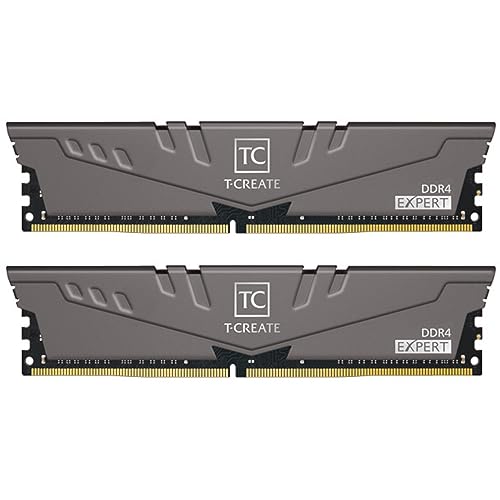
Best DDR4 RAM for Streaming: Smooth Live Broadcasts Buying Guide
Memory Capacity for Streaming Workloads
Live streaming places unique demands on desktop memory because open capture software runs alongside modern games. While a standard gaming setup functions on 16GB, simultaneous broadcasting software and browser plugins quickly consume remaining capacity. Selecting a 32GB kit provides comfortable headroom to prevent Windows from paging memory to storage drives.
Creators who run heavy scene transitions, local recording archives, and virtual camera software should consider a 64GB setup. The extra memory buffers active video assets and chat bot integrations without compromising game responsiveness. Upgrading to larger capacities prevents sudden frame drops during intense gaming moments on your desktop and external displays.
Memory Frequency and Transfer Speeds
Frequency indicates how many data transfers a memory module completes every second. For DDR4 hardware, 3200MT/s and 3600MT/s represent the sweet spot for modern desktop processors. Faster modules reduce CPU wait cycles, allowing encoding engines to process frames with minimal delay.
Going beyond 3600MT/s often brings diminishing returns and potential stability issues on standard consumer motherboards. Broadcast setups prioritize absolute stability over theoretical synthetic benchmark records. Operating at validated frequencies ensures continuous playback without sudden stream crashes or blue screen errors.
CAS Latency and Memory Timings
Column Address Strobe latency measures the number of clock cycles required to deliver requested data. Lower latency ratings mean faster memory response times when game engines fetch textures and audio clips. A 3200MT/s kit with CL16 latency performs comparably to a 3600MT/s kit with CL18 latency in real-world broadcast scenarios.
Tighter timings reduce transient frame drops during sudden on-screen explosions or fast camera pans. This consistency translates directly to smooth viewer playback across high-refresh setups like HD computer monitors. Balancing frequency and latency gives you reliable frametime pacing throughout long streaming marathons.
Heat Dissipation and Cooler Clearance
Extended broadcasting sessions generate sustained thermal load inside your computer chassis. Modules equipped with solid aluminum heatspreaders conduct heat away from memory ICs efficiently. Maintaining lower operating temperatures protects component longevity and ensures stable signal integrity under heavy multitasking.
Physical height is another vital factor when building in mid-tower or compact cases. Tall RGB diffusers can interfere with dual-fan air coolers or front-mounted radiator hoses. Low-profile memory sticks provide guaranteed clearance without forcing you to adjust fan mounting brackets.
Dual-Channel Memory Architecture
Installing memory in matched pairs activates dual-channel architecture, doubling effective communication bandwidth to the processor. Running a single 32GB stick restricts memory throughput and introduces severe frame time stuttering while streaming. A matched two-stick kit delivers the full bandwidth required for simultaneous encoding and rendering.
Desktop platforms function best when using identical modules from the same production batch. Mixing different brands or speeds forces the motherboard to fall back to the lowest common settings. Buying factory-matched kits ensures full compatibility with Intel XMP and AMD memory overclock profiles.
| Kit Capacity | Target Frequency | CAS Latency | Primary Use Case |
|---|---|---|---|
| 32GB (2x16GB) | 3200 MT/s | CL16 | Standard 1080p Game Streaming |
| 32GB (2x16GB) | 3600 MT/s | CL18 | Competitive Gaming with Live Stream |
| 64GB (2x32GB) | 3600 MT/s | CL18 | Heavy Multitasking and Video Production |
How We Evaluated
Our evaluation process focused on verified hardware specifications, memory architecture, and real-world multitasking suitability. We analyzed transfer rates, sub-timings, and thermal dissipation designs across 7 DDR4 kits. This approach highlights how each memory module handles simultaneous gaming and live encoding loads.
We also examined motherboard qualified vendor lists and component compatibility standards. Comparing form factor dimensions and XMP profile support helped us identify modules that deliver plug-and-play stability. Our recommendations prioritize rock-solid system reliability over extreme experimental overclocks.
Common Mistakes to Avoid
One frequent mistake is forgetting to enable Intel XMP or AMD DOCP in the motherboard BIOS. Without activating this profile, high-speed RAM runs at basic JEDEC default speeds like 2133MT/s. This oversight bottlenecks CPU performance and leads to noticeable broadcast encoding stutter.
Another error is combining two separate memory kits that share the same part number. Even identical models can use memory chips from different silicon revisions that fail to sync properly. Always buy a single boxed kit containing your target capacity to ensure flawless stability.
Broadcasters also frequently overlook cooler clearance when buying tall RGB modules. Massive air coolers can block the first RAM slot and prevent tall heatspreaders from fitting. Checking cooler dimensions before purchasing prevents frustrating installation headaches on your desktop monitors workstation setup.
Buying Checklist
- Verify that your motherboard supports DDR4 memory slots rather than DDR5 sockets.
- Confirm that your chosen CPU cooler leaves sufficient physical clearance for the RAM heatspreader height.
- Select at least 32GB total capacity using a 2x16GB configuration for dual-channel bandwidth.
- Check your motherboard qualified vendor list to confirm tested frequency compatibility.
- Aim for a sweet spot of 3200MT/s CL16 or 3600MT/s CL18 for reliable stream encoding.
- Ensure the kit includes one-click XMP or memory profile support for easy configuration.
- Purchase a single unified kit rather than mixing two separate two-stick packages together.
Final Thoughts
Selecting the right memory kit keeps your broadcast smooth while gaming at demanding settings. For most content creators, G.SKILL Trident Z Neo Series DDR4 RAM (XMP) represents our top overall recommendation thanks to its dialed-in 3600MT/s frequency and excellent system stability. It provides consistent memory bandwidth that prevents dropped frames during complex stream scenes.
If you prefer a stealthy aesthetic and need maximum clearance under a bulky air cooler, CORSAIR Vengeance LPX DDR4 RAM 32GB (2x16GB) serves as an outstanding compact value. Professional studio broadcasters managing multiple cameras and editing timelines should look toward G.SKILL Trident Z RGB Series DDR4 RAM (XMP) for its massive 64GB capacity. Pair your upgraded system with high-clarity high resolution monitors to manage your live chat and production feed comfortably.
Frequently Asked Questions
How much RAM is ideal for live streaming in 2026?
A 32GB memory kit is the ideal standard for modern live streaming. It allows you to run resource-heavy games alongside OBS, Discord, alerts, and browser tabs without running out of buffer space. Creators doing 4K video editing or running dual-system setups may benefit from upgrading to 64GB.
What is the top pick for Best DDR4 RAM for Streaming in 2026?
The top recommended option is G.SKILL Trident Z Neo Series DDR4 RAM (XMP). It combines optimized 3600MT/s speed with stable timings that keep your gaming frame rates steady during live transmissions. The quality heatspreader also ensures dependable thermal performance during long broadcast sessions.
Does faster RAM improve stream quality?
Faster RAM improves 1% low frame rates and reduces micro-stutter in modern games. This consistency ensures your encoding hardware receives a steady video stream without dropped frames. While it does not change your internet bitrate, it creates a noticeably smoother viewing experience for your audience.
Is 3200MHz or 3600MHz better for gaming and streaming?
Both speeds deliver solid performance, but 3600MHz offers slightly better bandwidth on modern processors. A 3600MT/s CL18 kit matches the sweet spot for AMD Infinity Fabric and Intel memory controllers. A 3200MT/s CL16 kit remains an excellent cost-effective choice with nearly identical overall latency.
Why is dual-channel memory essential for broadcasters?
Dual-channel configurations utilize two 64-bit communication channels simultaneously to double data throughput. Single-channel setups create a bandwidth bottleneck that leads to dropped broadcast frames and game stuttering. Always install memory in matched pairs to unlock full system bandwidth on your quality monitors setup.
Do I need RGB lighting on my streaming RAM?
RGB lighting is strictly an aesthetic choice and does not affect broadcasting performance. In fact, low-profile non-RGB modules often provide better clearance for large CPU coolers. Choose lighting if you showcase your PC on camera, or pick standard heatspreaders for compact functionality.
How do I enable full RAM speed after installation?
You must enter your motherboard BIOS upon startup and enable the Intel XMP or AMD EXPO profile. This one-click setting automatically adjusts memory voltage, frequency, and timings to manufacturer ratings. If left disabled, the RAM will run at standard default baseline speeds.
Can I mix two different RAM brands in my streaming PC?
Mixing different RAM brands or kit models is not recommended for streaming PCs. Differences in sub-timings and memory chips can cause blue screen crashes and stream interruptions. Always use a single matched kit to guarantee long-term stability under heavy multitasking.