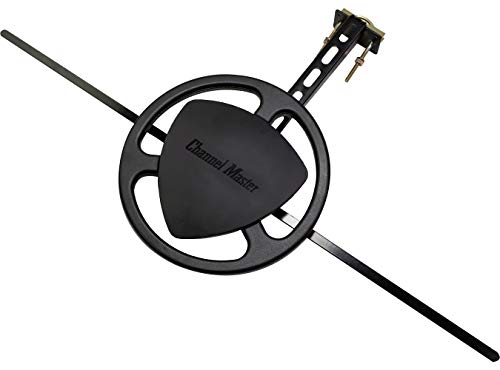
Finding the ideal broadcast receiver depends heavily on your local terrain and the distance to broadcast towers in your region. For complete coverage without manual re-aiming, the 1byone Outdoor TV Antenna delivers exceptional all-weather reception for homeowners cutting expensive cable subscriptions. You can also consult our How To guide category for helpful tips on setting up home media systems.
If you need multi-room support or dynamic amplification adjustments, the Outdoor TV Antenna – ANTOP AT-414B serves as a powerful alternative that handles several displays at once. Below, we compare 5 models in October 2026 to help you pick the right signal setup for your home.


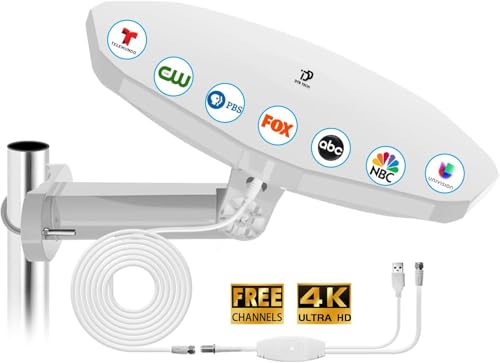
Best Omindirectional TV Antennas Buying Guide for 2026
360-Degree Reception Patterns
Traditional directional antennas must point straight toward a single broadcast tower to gather clear frequency signals. Omnidirectional models capture broadcasts from all surrounding directions simultaneously, eliminating the hassle of manually adjusting mast directions.
This design works best for suburban homes situated between multiple major city transmission towers. You can connect your receiver to HDMI displays or smart televisions without losing channels when stations broadcast from opposite directions.
Preamplification and Noise Filtering
Broadcast signals weaken as they travel through open air, trees, and dense building materials before reaching your roof. Integrated preamplifiers boost low-level frequencies right at the antenna head before signal loss occurs over long coaxial runs.
Modern receivers also include specialized 4G and 5G cellular filters within their electronic housing circuits. These active filters stop mobile phone traffic from causing pixelation or ghosting on your high-definition display screens.
Signal Range and Terrain Factors
Manufacturer range estimates reflect ideal line-of-sight conditions over flat geographical areas without dense tree coverage. Real-world performance varies according to local elevation, heavy forest foliage, and nearby architectural structures.
Selecting an antenna with selectable gain modes allows you to balance close-range sensitivity against long-distance amplification. Over-amplifying strong nearby tower signals can distort video output just as severely as weak signals.
| Feature | Omnidirectional | Directional |
|---|---|---|
| Signal Direction | 360 Degrees | Single Direction |
| Tower Adjustment | None Required | Manual Aiming |
| Multi-Tower Support | Excellent | Limited |
| Wind Resistance | High (Compact) | Moderate (Large Vanes) |
Weatherproofing and Outdoor Durability
Outdoor mounting hardware must endure severe wind gusts, heavy rainfall, intense sun exposure, and freezing winter conditions. Flame-retardant UV-stabilized plastic enclosures shield delicate internal circuitry from moisture invasion and thermal damage.
Sturdy mounting brackets and quality waterproof coaxial cables protect signal integrity throughout seasonal weather shifts. Indoor or attic installations avoid weather exposure entirely, though thick roofing materials reduce overall reception strength.
Multi-Room Signal Splitting
Splitting a single broadcast feed across several household televisions divides the incoming signal energy among those connections. High-output omnidirectional units supply sufficient signal gain to compensate for splitter loss across multiple viewing stations.
Pairing an antenna with modern television sets or computer display setups ensures clear broadcast reception in every room. Always check splitter attenuation ratings to maintain high image quality throughout your home layout.
How We Evaluated
We evaluated 5 omnidirectional hardware options across the $49.99 – $79.80 price range, focusing on verified receiver specifications and housing durability. Our analysis compared preamplifier gain profiles, LTE noise suppression filters, and mounting flexibility across urban, suburban, and rural placement setups.
We prioritized designs that deliver reliable 360-degree coverage without requiring physical adjustments after initial setup. Products were selected based on structural material quality, splitter compatibility, and resistance to environmental stress over long term outdoor deployment.
Common Mistakes to Avoid
Installing an omnidirectional receiver inside a basement or lower level creates severe signal blockage from surrounding walls. Always position your antenna as high as possible on a roof, attic, or upper window ledge to maximize tower line-of-sight.
Over-amplifying incoming signals is another frequent error made by home media installers. Placing a high-gain preamplifier too close to a broadcast tower can overload tuner circuits and cause broadcast channels to drop out entirely.
Forgetting to perform a digital channel scan after repositioning hardware leads many users to assume an antenna is broken. Televisions must run a full frequency scan whenever antenna placement or cable configuration changes.
Buying Checklist
- Verify surrounding broadcast tower locations using online government signal coverage maps.
- Measure coaxial cable length needed from the outdoor mast to your interior television ports.
- Confirm your television includes a built-in ATSC digital tuner or set-top receiver box.
- Check whether your location requires an LTE signal filter to block cellular interference.
- Determine if your installation requires multi-room splitters and active signal boosting.
- Select weather-resistant UV shielding if mounting the enclosure outdoors on a roof mast.
- Ensure mounting pole hardware matches your planned mounting surface or chimney fixture.
Final Thoughts
Selecting the ideal broadcast setup simplifies cord-cutting while restoring crystal-clear high-definition local channel reception. For the top overall recommendation, the 1byone Outdoor TV Antenna combines straightforward installation with balanced omnidirectional signal capture.
If you need multi-room distribution with dynamic amplifier tuning, the Outdoor TV Antenna – ANTOP AT-414B handles multiple display connections efficiently. For budget-conscious buyers seeking reliable local news and sports, the Digital TV Antenna Outdoor 360° Omni-Directional provides dependable performance. You can also explore 4K display setups to optimize your overall viewing experience.
Frequently Asked Questions
What is the advantage of choosing Best Omindirectional TV Antennas in 2026?
Omnidirectional antennas pull signals from all 360 degrees simultaneously without requiring manual rotation. This allows homeowners to capture broadcasts from multiple city tower locations using a single compact receiver head.
Do Best Omindirectional TV Antennas work inside attics?
Yes, omnidirectional models work effectively inside attic spaces away from rain and wind. However, roofing materials and building insulation can reduce overall signal range compared to outdoor roof installations.
Why do I need a built-in LTE filter on my antenna?
Cellular phone networks operate on frequencies close to television broadcast bands. Integrated LTE filters block mobile phone signals, preventing pixelation and picture disruption on modern screens.
Can I connect one antenna to multiple televisions in my home?
Yes, you can distribute signals to multiple televisions using a standard coaxial signal splitter. Choosing an amplified receiver ensures strong signal levels reach every display room across your household setup.
How far can Best Omindirectional TV Antennas reach?
Real-world reception ranges generally span between 50 and 120 miles depending on elevation and atmospheric conditions. High-gain amplifiers expand reception potential over flat suburban and rural landscapes.
How often should I scan for channels on my television?
You should run a channel auto-scan whenever you adjust antenna height or move its physical location. Station broadcast changes or seasonal tree leaf growth may also require periodic channel re-scanning.
Do omnidirectional antennas require external electrical power?
Passive antennas operate without electrical power, while amplified units require a power adapter to run the signal booster. Powered models perform significantly better in distant signal areas. If you are configuring desktop viewing stations, see our guide on Best External Monitors: Choose Comfort and Value.