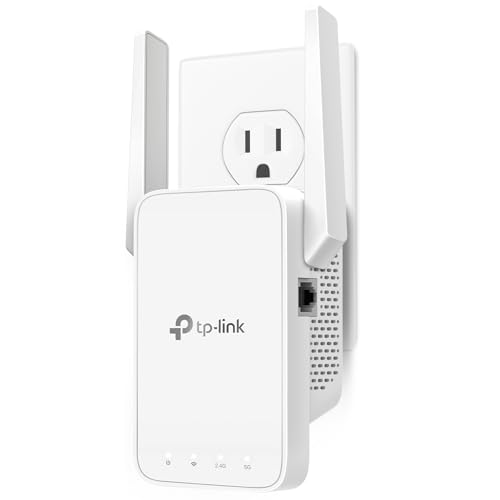

Finding the right equipment to banish dead zones across your house does not require replacing your primary router. For most households searching for Best Wireless AC Range Extenders in September 2026, the TP-Link AC2600 WiFi Extender(RE650) delivers exceptional coverage and multi-device throughput. If you need step-by-step guidance on setting up network gear, check out our How To section for helpful technical guides.
For users who want modern Wi-Fi 6 readiness alongside high bandwidth capabilities, the TP-Link AX3000 WiFi 6 Range Extender serves as a powerful alternative across 5 compared models. Budget-conscious buyers will also find great value in compact plug-in units like the NETGEAR WiFi Mesh Range Extender (EX5000).



Best Wireless AC Range Extenders Buying Guide
Wi-Fi Speed Standards and Bandwidth Ratings
Understanding bandwidth ratings is essential when choosing wireless repeaters for your home setup. Wireless AC devices use dual-band technology, splitting traffic between 2.4 GHz and 5 GHz frequency bands. Higher ratings like AC2600 or AC1900 combine the potential theoretical speeds of both frequency bands together.
Remember that range extenders relay signals wirelessly, which inherently cuts maximum throughput in half during retransmission. Choosing a higher capacity rating ensures that your extended connection retains enough bandwidth for 4K streaming and online gaming. Pairing high-performance extenders alongside quality displays like those featured in our Computer Monitors & Displays directory ensures seamless wireless streaming.
Antenna Design and Beamforming Technology
Physical antenna layout heavily dictates how effectively an extender broadcasts signals through interior walls. External adjustable antennas allow you to direct signal propagation toward weak zones across multiple floors. Internal antennas offer cleaner aesthetic designs but can sacrifice directional range in larger homes.
Beamforming technology further enhances coverage by targeting wireless signals directly toward connected client devices. Instead of broadcasting uniformly in all directions, beamforming creates stronger point-to-point links. This reduces interference while improving speed consistency for mobile phones and laptops situated far from the main router.
Wired Ethernet Port Speeds
Many wireless boosters include physical ethernet ports to connect stationary wired equipment directly. Extenders feature either Fast Ethernet ports capped at 100 Mbps or Gigabit Ethernet ports capable of 1000 Mbps. Connecting smart TVs or gaming consoles directly to a gigabit port yields maximum stability.
If you connect high-bandwidth workstations or specialized gear such as Best External Computer Monitors for Comfort at Work setups, opt for gigabit-enabled extenders. A Fast Ethernet port will bottleneck high-speed internet plans, limiting wired connections regardless of wireless speed capability.
Mesh Network Compatibility and Seamless Roaming
Traditional range extenders create separate network names, requiring your phone or laptop to switch connections manually. Modern extenders featuring EasyMesh or mesh roaming protocols share a single network name with your primary router. This allows your mobile devices to transition smoothly without dropping active calls or video streams.
Before purchasing, check whether the extender supports standardized mesh protocols compatible with your existing router brand. True mesh integration keeps connectivity seamless while walking between rooms, avoiding manual network switching frustrating daily use.
Physical Form Factor and Placement Indicators
Range extenders come in plug-in wall designs or desktop unit form factors. Wall-plug models plug directly into electrical outlets, keeping cables hidden and freeing up shelf space. Desktop models are larger but often accommodate beefier hardware and additional ethernet ports.
Proper placement is crucial for extender performance, as placing it too far from the router degrades incoming signal strength. Look for models with built-in signal indicator lights or smartphone apps that assist in finding the sweet spot halfway between your router and dead zones.
How We Evaluated
Our evaluation process focuses on analyzing technical specifications, signal management features, and hardware architecture across leading brands like TP-Link, Linksys, NETGEAR. We examined total wireless bandwidth, antenna configurations, ethernet port throughput, and mesh software protocols to determine practical real-world utility.
We carefully assessed structural form factors and setup technologies to ensure recommendations serve varying home layouts effectively. By analyzing manufacturer performance data and feature trade-offs within the $14.99 – $79.97 price range, we selected options that deliver clear network coverage improvements.
Common Mistakes to Avoid
Placing the extender directly inside the room suffering from poor Wi-Fi is a frequent mistake among buyers. An extender must be placed halfway between your router and the weak area so it receives a strong signal to retransmit effectively.
Expecting wireless extenders to double overall internet subscription speeds is another common misconception. Extenders expand the coverage area of your existing signal rather than increasing the raw internet bandwidth delivered by your internet service provider.
Overlooking ethernet port specification details can lead to unexpected wired speed bottlenecks. Purchasing an AC1200 extender equipped only with a Fast Ethernet port limits wired speeds to 100 Mbps, regardless of fast wireless capabilities.
Buying Checklist
- Verify whether your main router uses Wi-Fi 5 (802.11ac) or Wi-Fi 6 (802.11ax) standards.
- Confirm the physical distance and wall obstacles between your router and dead zone areas.
- Check if the ethernet port is Gigabit rated if you plan to connect wired devices.
- Ensure the extender supports EasyMesh or unified network naming for seamless roaming.
- Choose between a space-saving wall-plug model or a multi-antenna desktop unit.
- Confirm the presence of visual signal strength LEDs or app-guided installation tools.
- Check total connected device capacity to accommodate smart home accessories.
Final Thoughts
Selecting the ideal signal booster depends on your home size, device count, and overall bandwidth demands. For users demanding maximum speed across demanding multi-device households, we recommend the TP-Link AC2600 WiFi Extender(RE650) for its impressive quad-antenna array and quad-stream capacity. High-resolution displays and remote work setups benefit significantly from this level of consistent wireless throughput, similar to recommendations found in our guide on Best Hi Res Monitors for Productivity and Comfort.
If you want a modern Wi-Fi 6 upgrade that handles future devices, the TP-Link AX3000 WiFi 6 Range Extender offers excellent gigabit performance and seamless mesh expansion. Meanwhile, those who need an affordable plug-and-play solution will appreciate the NETGEAR WiFi Mesh Range Extender (EX5000) for simple setup and reliable daily coverage.
For budget-focused network updates or basic dead zone removal, the TP-Link AC1200 WiFi Extender provides impressive dual-band performance without breaking the bank. Gamers seeking low-latency connections can also explore optimized setup tips in our Gaming Monitors section to complement their upgraded home Wi-Fi network.
Frequently Asked Questions
Do Best Wireless AC Range Extenders work with any Wi-Fi router in 2026?
Yes, universal wireless AC extenders are backward compatible and designed to connect with standard internet routers or gateway modems regardless of brand. However, specific mesh seamless roaming features might require matching compatible router brands or protocols.
Will a range extender increase my maximum internet speed?
No, range extenders are engineered to expand signal coverage area rather than boost base internet speeds. By improving weak signal stability in distant rooms, an extender can help restore lost performance back up to your router speed limits.
Where is the best place to install a range extender?
The optimal location is roughly halfway between your main Wi-Fi router and the area with poor reception. The extender must sit close enough to the router to capture a strong, reliable signal before relaying it to dead zones.
What is the top-rated option among Best Wireless AC Range Extenders in 2026?
The top choice for robust coverage and high throughput is the TP-Link AC2600 WiFi Extender(RE650). It features 4×4 MU-MIMO streams and quad antennas designed to handle heavy multi-device home traffic effectively.
Is dual-band AC capability better than single-band Wi-Fi?
Dual-band AC extenders are significantly better because they utilize both 2.4 GHz for long distances and 5 GHz for higher data speeds. Single-band repeaters congest network traffic and suffer from severe speed reductions under heavy use.
What is the difference between Access Point mode and Extender mode?
Extender mode receives Wi-Fi wirelessly from your router and retransmits it to fill dead spots. Access Point mode connects directly to your router via an ethernet cable to create a fresh wireless network broadcast without signal loss.
How many devices can a wireless AC range extender handle at once?
Most modern AC range extenders comfortably support between 15 and 64 connected devices simultaneously depending on memory capacity and stream configuration. Units with MU-MIMO technology handle multiple concurrent device connections more efficiently.