

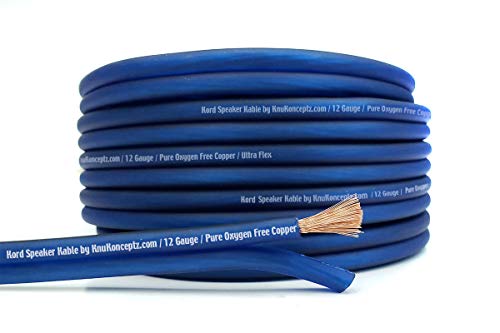
Selecting the right cabling for your home cinema determines how cleanly your receiver sends power to each channel. For high power demands and long runs, KnuKonceptz Kord Speaker Cable 12 Gauge Oxygen delivers pure oxygen-free copper with minimal electrical resistance. This makes it ideal for surround sound enthusiasts who want maximum signal integrity across their entire room layout. If you are also following our how-to setup guides for entertainment spaces, starting with strong wiring prevents future sound issues.
Budget-focused installations require a balance between price and copper conductivity over standard room distances. The Amazon Basics 16-Gauge Speaker Wire Cable offers a practical solution for basic stereo pairs and short rear speaker runs without compromising audio clarity. We compared 7 models for October 2026 to help you find the Best Wire for Home Theater Speakers for your target budget.



Best Wire for Home Theater Speakers Buying Guide for 2026
Wire Gauge and Resistance (AWG)
American Wire Gauge measures the thickness of internal conductors. Lower AWG numbers represent thicker wire with lower electrical resistance. Thicker cables let amplifiers push higher current to speakers without signal degradation over long distances.
For long runs over fifty feet, 12 AWG or 14 AWG wire keeps audio dynamics punchy and clear. Short desktop or bookshelf setups can reliably use 16 AWG cable without loss of volume. Matching thickness to distance prevents power loss between your receiver and surround speakers.
Pure Copper (OFC) vs Copper-Clad Aluminum (CCA)
Conductor material directly affects conductivity, flexibility, and heat tolerance. Oxygen-Free Copper offers pure copper content for maximum signal efficiency. CCA wire uses an aluminum core coated in thin copper, making it lighter and more budget friendly.
OFC wire maintains consistent conductivity over long lifespans without oxidizing internally. CCA wire works well for short budget installs, but higher electrical resistance means you may need a thicker gauge. Choosing pure copper guarantees low resistance for high performance audio systems and desktop audio setups.
Cable Jacket Flexibility and Insulation
The outer jacket protects conductors from physical damage and environmental factors. Flexible PVC coatings make it easy to route cabling around sharp baseboards or beneath carpet padding. Low memory jackets lie flat immediately after unspooling, preventing frustrating loops during installation.
Smooth insulation also helps when pulling cable through tight conduits or furniture cutouts. Rigid jackets increase setup effort and put strain on speaker terminals over time. Soft-touch coatings reduce friction and keep cable runs tidy along wall edges.
Polarity Markings and Identification
Connecting positive and negative leads correctly ensures your speakers operate in phase. Out-of-phase speakers cancel out bass frequencies and ruin spatial imaging in surround sound setups. Clear polarity indicators eliminate costly wiring mistakes during complex multi-channel installations.
Look for jackets featuring raised ridges, distinct color stripes, or printed sequential foot markers. Double-conductor designs with color-coded jackets simplify hookups behind dark media cabinets. Clear visual markers speed up terminal connections and guarantee consistent polarity across all channels.
Run Length and Room Layout Planning
Measuring exact distances before cutting prevents wasted cable and awkward tension on connectors. Measure along wall paths rather than in direct lines across open floor space. Adding ten percent extra length leaves convenient slack for component adjustments later.
Longer runs require thicker wire to counter cumulative resistance along the pathway. Receiver location relative to rear surround channels dictates whether 12 AWG or 16 AWG is optimal. Proper path planning ensures signal strength remains balanced across front and rear channels.
How We Evaluated
We evaluated these speaker wires by analyzing physical specifications, material purity, conductor gauge accuracy, and jacket insulation properties. Our comparison focuses on electrical resistance characteristics, ease of stripping, and polarity legibility under realistic home audio routing scenarios.
We cross-referenced manufacturer specifications against industry standards for American Wire Gauge dimensions. Value ratings consider total spool length relative to conductor material and jacket flexibility. Our goal is providing unbiased guidance based on objective technical data.
Common Mistakes to Avoid
Choosing 16 AWG wire for cable runs exceeding fifty feet causes unwanted power loss. Thinner wire increases electrical resistance, muffling dynamic audio peaks in surround sound systems. Always step up to 12 AWG or 14 AWG for longer room runs.
Reversing polarity on a surround speaker creates hollow, thin bass performance. If positive and negative leads are swapped, speaker cones move in opposite directions. Double check jacket polarity stripes before powering on your amplifier.
Mistaking Copper-Clad Aluminum for pure copper leads to unexpected voltage drops on long runs. Check product specs for explicit Oxygen-Free Copper labels if maximum conductivity is required. Using CCA when OFC is needed degrades total audio fidelity.
Buying Checklist
- Measure the total distance from receiver to each speaker including extra slack.
- Confirm whether your setup requires 12 AWG, 14 AWG, or 16 AWG gauge thickness.
- Determine if you prefer pure OFC copper or budget-friendly CCA wire.
- Verify that the cable outer jacket includes clear polarity stripes or color coding.
- Check that the jacket material offers soft flexibility for smooth baseboard routing.
- Ensure you have proper wire strippers or terminal banana plugs ready for installation.
- Confirm total spool length covers all channel runs with ten percent reserve length.
Final Thoughts
Upgrading your home theater wiring yields immediate improvements in sound clarity and system reliability. For demanding high-power speaker systems, we recommend KnuKonceptz Kord Speaker Cable 12 Gauge Oxygen for its pure copper construction and low resistance. Its soft jacket lays flat easily, making long cable runs across living rooms simple to handle.
Buyers seeking heavy-duty insulation on a medium budget will appreciate InstallGear 12 Gauge Speaker Wire 100ft for its rugged build. Meanwhile, Amazon Basics 16-Gauge Speaker Wire Cable provides a cost-effective option for shorter bookshelf connections. Matching wire gauge to room dimensions ensures peak performance from your audio equipment.
For related media center guides and display recommendations, explore our external monitor arrangements. Taking time to plan cable routing pays off with cleaner aesthetics and immersive surround sound performance.
Frequently Asked Questions
What is the top pick for Best Wire for Home Theater Speakers in 2026?
The top recommendation among Best Wire for Home Theater Speakers is pure 12 AWG Oxygen-Free Copper wire. It provides minimal resistance over long runs, ensuring your receiver delivers maximum clean power to surround speakers.
Does speaker wire gauge affect sound quality?
Yes, wire gauge directly influences electrical resistance between receiver and speaker. Thicker wire like 12 AWG or 14 AWG carries current efficiently over long distances, preserving bass punch and overall dynamic clarity.
What is the difference between OFC and CCA speaker wire?
Oxygen-Free Copper contains pure copper for optimal conductivity and long-term durability. Copper-Clad Aluminum uses an aluminum core coated with copper, offering a lighter and less expensive alternative for shorter runs.
Is 16 gauge wire thick enough for surround sound speakers?
16 gauge wire works exceptionally well for short runs under thirty feet. For longer surround speaker runs through walls or along baseboards, thicker 14 AWG or 12 AWG cable minimizes power loss.
How do I identify positive and negative leads on speaker wire?
Most speaker cables feature a colored stripe, raised ridge, or printed text on one side of the jacket. Connecting the marked conductor consistently to positive red terminals maintains proper speaker phase across all channels.
Can I use speaker wire for desktop setup installations?
Yes, speaker wire functions seamlessly for connecting active or passive monitors in small audio environments. Check out our HDMI connectivity guides for integrated workspace setup recommendations.
How much extra speaker wire should I buy for installation?
Purchasing ten to fifteen percent more wire than your straight-line measurements allows safe routing around corners. Extra slack prevents physical strain on receiver jacks and lets you reposition speakers easily later.


