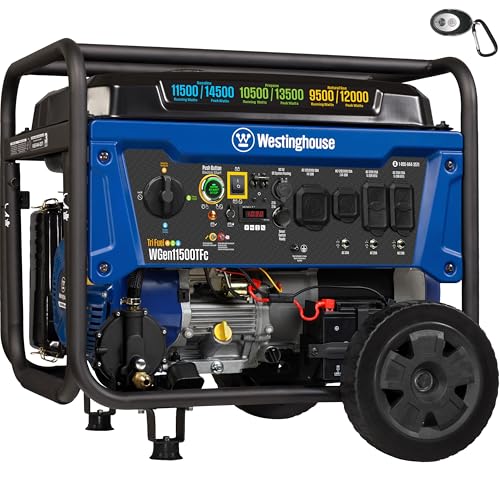

Severe storms and unexpected grid failures can shut down household essentials within seconds. For total peace of mind, the Westinghouse 14500 Peak Watt Tri-Fuel Home Backup stands as our top pick among 5 generators evaluated for October 2026. It delivers massive tri-fuel output and low harmonic distortion to protect your appliances and home workspace as highlighted in our practical emergency guides.
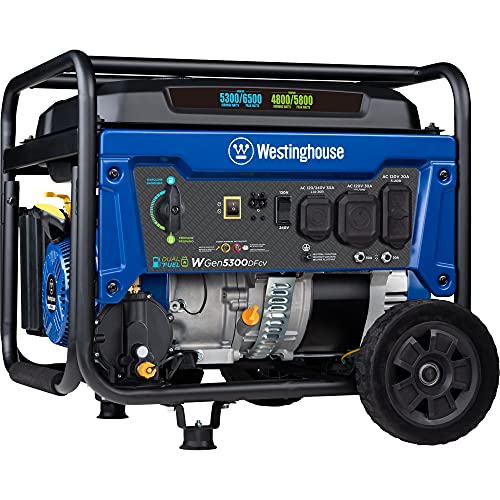
Homeowners seeking a lighter emergency option for refrigerators and essential circuits should look at the Westinghouse 6500 Watt Dual Fuel Home Backup. It combines dependable dual-fuel efficiency with a portable frame at a highly accessible entry point.



Best Home Generators for Power Outages: Reliable Backup Buying Guide
Running Watts vs Starting Watts
Every electrical appliance requires two distinct power numbers to operate during an emergency blackout. Running wattage sustains continuous operation, while starting wattage accommodates the initial surge required by motor-driven appliances.
Central air conditioners and sump pumps can demand up to three times their standard running wattage during startup. Choosing an undersized generator causes automatic breaker trips and prevents critical household equipment from activating when you need it most.
You should total the running watts of all required devices and add the single highest starting surge wattage. This calculation ensures your generator operates comfortably below maximum capacity to prevent premature engine fatigue.
Fuel Flexibility and Availability
Dual-fuel and tri-fuel capabilities offer crucial flexibility when severe storms disrupt local fuel supply chains. Gasoline provides the highest power output, but it degrades quickly and requires fuel stabilizers during storage.
Liquid propane stores indefinitely without gumming up engine carburetors, making it ideal for seasonal standby readiness. Natural gas connections provide an uninterrupted fuel line, eliminating the need to store portable fuel cans during prolonged power outages.
Balancing fuel types ensures you can adapt to regional shortages following severe weather events. Modern generators feature front-panel selector switches that allow seamless transitions between propane and gasoline while running.
Transfer Switch Integration and Outlets
Connecting a portable generator directly into your home requires a dedicated manual transfer switch. A transfer switch prevents dangerous backfeeding into the utility grid, which poses severe hazards to utility line workers.
Heavy-duty 50-amp outlets support whole-home distribution panels and central heating systems without balancing multiple extension cords. Smaller 30-amp twist-lock receptacles provide adequate support for essential subpanels covering refrigerators, lights, and well pumps.
Installing a transfer switch allows you to manage circuit loads safely from inside your home. It also eliminates the need to route thick extension cords through open windows during freezing winter storms.
Total Harmonic Distortion for Electronics
Total harmonic distortion measures the cleanliness and stability of the electrical sine wave produced by the alternator. Standard generators produce higher distortion levels that can overheat sensitive microprocessors and delicate modern power supplies.
Clean power with low harmonic distortion protects costly hardware such as laptops, routers, and high-end computer displays. It ensures that running your remote workstation alongside major home appliances causes no digital flickering or component strain.
If you plan to power delicate home office gear alongside heavy appliances, prioritize generators engineered with low distortion alternators. Exploring dedicated desktop monitors setups highlights why clean voltage regulation is vital during outages.
Safety Systems and Carbon Monoxide Detection
Carbon monoxide emissions represent the single greatest safety concern when operating any fuel-burning generator. Modern home generators now feature integrated sensors that automatically shut down the engine upon detecting elevated gas concentrations.
Even with advanced shutoff sensors, you must position your generator at least twenty feet away from doors, windows, and vents. Never operate portable generators inside enclosed spaces, garages, or covered porches regardless of ventilation conditions.
Weatherproof outlet covers and heavy-duty grounding terminals provide additional layers of operational safety. These protective features help shield electrical connections from rain and debris during severe outdoor weather.
Runtime Efficiency and Engine Construction
Engine build quality directly dictates how many consecutive days a generator can supply reliable residential power. Commercial-grade engines featuring cast iron cylinder sleeves offer superior heat dissipation and reduced oil consumption over extended run cycles.
Generators with 100 percent copper windings run significantly cooler and last much longer than units built with aluminum wiring. Copper conducts electrical currents more efficiently, maintaining stable voltage output under fluctuating household electrical loads.
Fuel efficiency also determines how frequently you must venture outside to refuel during harsh weather. Large capacity fuel tanks paired with intelligent throttle management can deliver over twelve hours of continuous runtime on a single fill.
| Household Appliance | Typical Running Watts | Estimated Starting Watts | Recommended Outlet |
|---|---|---|---|
| Refrigerator / Freezer | 700W – 1,000W | 2,200W | 120V 20A Duplex |
| Sump Pump (1/2 HP) | 1,050W | 2,150W | 120V 20A Duplex |
| Central AC (3 Ton) | 3,500W | 10,000W | 120/240V 50A (14-50R) |
| Home Office / Displays | 300W – 600W | 600W | 120V 20A GFCI |
| Microwave Oven | 1,000W | 1,500W | 120V 20A Duplex |
How We Evaluated
We evaluated each generator by analyzing manufacturer specifications, verified load capabilities, and fuel efficiency metrics across diverse real-world emergency scenarios. Our assessment focused on continuous wattage delivery, surge management, and fuel transition reliability under heavy electrical demand.
We prioritized models offering robust engine components, comprehensive outlet configurations, and built-in safety mechanisms like automated carbon monoxide monitoring. This objective analysis ensures that every featured model provides dependable performance when severe weather strikes.
Common Mistakes to Avoid
Ignoring appliance startup surges is a frequent mistake that leads to overloaded generators and nuisance breaker tripping. Always calculate the initial motor surge rather than relying solely on continuous running wattage ratings.
Storing untreated gasoline inside the fuel tank will gum up carburetors and prevent the engine from starting during an emergency. Always drain the fuel bowl or add stabilizing additives before placing the unit in seasonal storage.
Running generators too close to residential structures exposes your family to hazardous exhaust fumes. Maintain proper outdoor clearances and position the exhaust port away from open windows and ventilation intakes.
Failing to balance electrical loads across 120-volt legs can strain generator alternators and cause uneven voltage drops. Distribute your household appliances evenly across subpanel circuits to maintain stable power delivery.
Buying Checklist
- Calculate total starting wattage for simultaneous appliances before choosing generator size.
- Verify your manual transfer switch matches either the 30-amp L14-30R or 50-amp 14-50R outlet.
- Ensure fuel stabilizer is on hand for stored gasoline or secure dedicated propane tanks.
- Confirm the unit features built-in carbon monoxide safety shutoff protection.
- Check that clean power specifications protect sensitive electronics like external monitors and laptops.
- Inspect all wheel kit components and handles for easy mobility over rough outdoor terrain.
- Keep appropriate 4-stroke engine oil and maintenance spare parts ready prior to storm season.
Final Thoughts
Selecting the right generator ensures your household stays safe, warm, and connected through severe weather and prolonged blackouts. The Westinghouse 14500 Peak Watt Tri-Fuel Home Backup offers our highest recommendation for whole-home resilience thanks to its massive tri-fuel versatility.
If you need heavy-duty 50-amp power with a rugged steel chassis, the DuroStar DS13000MX 13,000-Watt 500cc Dual Fuel provides outstanding dual-fuel performance. For smaller households managing essential circuits, the Westinghouse 6500 Watt Dual Fuel Home Backup delivers reliable power at an accessible price point.
Investing in dependable backup power protects valuable electronics and keeps essential home systems running without interruption. Check our guide to quality monitors to discover resilient hardware setups for your emergency home workstation.
Frequently Asked Questions
What wattage is needed for Best Home Generators for Power Outages: Reliable Backup?
Most average homes require between 5,000 and 7,500 running watts to keep essential appliances such as refrigerators, lights, and sump pumps operating during a blackout. Whole-home backup setups running central air conditioners and electric water heaters typically require 10,000 running watts or more.
Can I run sensitive electronics directly from backup generators in 2026?
You can safely power sensitive devices if the generator features low total harmonic distortion or an inverter design. Standard generators producing high distortion can strain power adapters for HDMI monitors and laptops, making surge protection essential.
How often should you run a home backup generator during storage?
You should run your backup generator for twenty to thirty minutes every two to three months under a light electrical load. Exercising the unit circulates lubricating oil through the engine components, prevents seal drying, and keeps the internal starting battery charged.
What is the main advantage of tri-fuel capability during storms?
Tri-fuel capability allows you to switch between gasoline, liquid propane, and residential natural gas lines depending on availability. This ensures continuous operation even when gas stations lose electricity or storm debris blocks local fuel deliveries.
Why is a transfer switch necessary for whole-home backup?
A transfer switch safely isolates your generator power from the municipal electrical grid to eliminate dangerous backfeeding into utility lines. It also provides an organized method to power hardwired household appliances without running multiple extension cords indoors.
How does dual fuel operation impact running wattage output?
Engines running on liquid propane typically produce roughly ten to fifteen percent less wattage compared to running on standard gasoline. Propane has a slightly lower energy density, but it burns cleaner and allows significantly longer shelf storage without fuel degradation.
Where should portable generators be positioned for safe home backup?
Place portable generators outdoors on a level, dry surface at least twenty feet away from all household windows, doors, and vents. Point the engine exhaust directly away from the home to prevent toxic carbon monoxide fumes from collecting near living spaces.