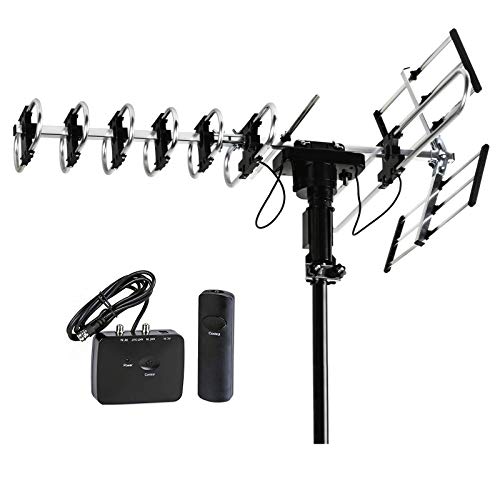

Selecting the right setup for clear over the air television requires balancing signal range with amplification technology. We compared 7 models for September 2026 to identify which hardware maintains strong stability. The Televes 108381 8-Bay BOSS Mix HDTV Antenna stands out as our top pick for distant broadcast towers because its automatic gain control prevents signal distortion. Learn more about optimizing home entertainment setups in our How To tutorials section.
If you need a reliable option for moderate distances, the GE Outdoor HD Digital TV Antenna offers impressive reception in a compact frame. It captures both VHF and UHF frequencies without needing complex assembly.



Best Reception Outside TV Antennas Buying Guide for 2026
UHF and VHF Frequency Band Coverage
Broadcast stations transmit channels over two distinct frequency bands known as VHF and UHF. Many modern antennas optimize exclusively for UHF channels while neglecting lower VHF frequencies. This causes missing local networks when key channels broadcast on VHF signals.
You should verify that your antenna includes dedicated elements for both frequency ranges. High VHF coverage is essential for receiving comprehensive channel lineups in suburban and rural areas. Skipping dual band capability often results in incomplete station lists after scanning.
Amplification and Automatic Gain Control
Preamplifiers boost weak signals traveling through long coaxial cables to your television receiver. However, excessive amplification can overpower nearby broadcast signals and create digital picture distortion. Finding a balanced booster system ensures clean channel reception without receiver overload.
Intelligent gain control automatically adjusts signal boosting based on real-time channel conditions. Advanced filtering technology also blocks cellular interference from 4G and 5G towers nearby. Readers looking for reliable visual performance can explore our HD display hardware guides for additional setup tips.
Directional vs Omnidirectional Antenna Design
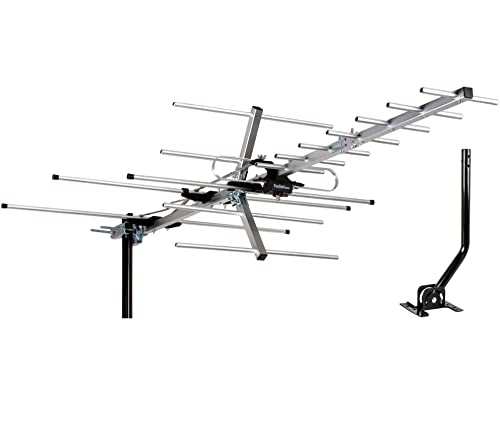
Directional antennas focus receiving power toward specific broadcast tower clusters for maximum range. Multi-bay reflector panels and Yagi designs capture weak signals from distant transmitters effectively. These models require accurate pointing during initial installation to achieve optimal results.
Omnidirectional and motorized rotating antennas offer flexibility when stations originate from multiple directions. Motorized rotors allow you to adjust orientation remotely from inside your living room. Choose directional setups for distant towers and motorized units for spread-out broadcast locations.
Weatherproofing and Outdoor Durability
Outdoor antennas encounter harsh weather conditions ranging from freezing rain to heavy winds. Corrosion resistant aluminum elements and sealed housing protect sensitive internal preamplifiers from moisture damage. Robust mounting hardware keeps the structure stable during heavy storms.
Installing high quality coaxial cables with weatherproof boots prevents signal degradation over time. Wind resistant structural designs reduce movement that causes intermittent picture pixelation. Selecting weather tight housing ensures stable channel reception through changing seasonal conditions.
Coaxial Cable Quality and Output Connections
Signal loss occurs naturally as television data travels through long copper coaxial lines. Using RG6 coaxial cables minimizes signal attenuation compared to thinner older wiring types. High quality shielding protects broadcast signals from electromagnetic noise produced by household electronics.
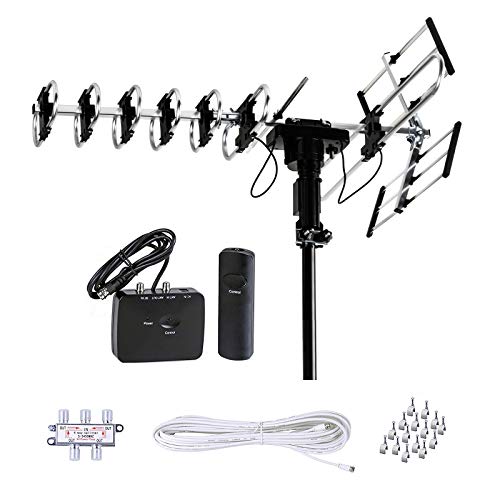
Some outdoor antennas feature dual outputs directly on the power control box. This feature splits broadcast signals to multiple televisions without degrading incoming picture quality. Similar signal routing principles apply when configuring high resolution display setups across multiple rooms.
NEXTGEN TV and ATSC 3.0 Compatibility
Broadcasters are actively rolling out NEXTGEN TV technology to deliver enhanced audio and video signals. Antennas designed for ATSC 3.0 receive 4K broadcast signals alongside improved color depth. Selecting future ready equipment ensures compatibility with upcoming digital broadcasting standards.
Standard over the air antennas capture ATSC 3.0 broadcasts whenever local stations transmit them. Ensure your television tuner or external converter box supports the newer digital standard. Combining clear antenna signals with modern receivers unlocks superior home viewing experiences.
| Antenna Feature | Directional Yagi | Motorized 360° | 8-Bay BOSS Mix |
|---|---|---|---|
| Target Distance | Up to 200 Miles | Up to 200 Miles | Up to 70 Miles |
| Best Use Case | Single Tower Direction | Multiple Tower Directions | Fringe Suburban / Rural |
| Amplification Type | Passive / Active Option | Auto Gain Built-in | TForce Intelligent Gain |
How We Evaluated
We evaluated models by analyzing verified technical specifications, frequency support, and real-world range ratings. Our process compared passive gain levels, amplifier noise figures, and cellular signal filtering capabilities across leading brands like GE, pbd, Five Star and more. We examined structural materials to assess resistance against wind loading and seasonal weather exposure.
Our review balanced long range performance against ease of installation and split TV connectivity. We prioritized hardware featuring flexible mounting options, clear instruction guides, and future ready ATSC 3.0 support. This data driven analysis helps you select the right antenna based on your distance from broadcast towers.
Common Mistakes to Avoid
Mounting an outdoor antenna without checking broadcast tower locations is a common oversight. Aiming directional elements away from signal sources reduces channel pickup significantly. Use online station maps to identify tower bearings before securing mounting brackets.
Ignoring VHF frequency requirements often leads to missing popular local stations after installation. Many compact antennas only capture UHF frequencies, leaving VHF channels unreceived. Verify station frequency bands in your area prior to choosing an antenna model.
Installing low quality or damaged coaxial cables degrades clear signal transmission from roof to receiver. Long cable runs require double shielded RG6 coax to prevent signal loss and interference. Avoid tight cable bends that damage internal copper conductors during setup.
Over-amplifying strong local signals causes receiver overload and pixelated video playback. Turning on maximum gain near broadcast towers distorts incoming channel frequencies. Use automatic gain control or passive modes when living close to local transmitters.
Buying Checklist
- Verify broadcast tower directions and distances using local coverage maps.
- Confirm antenna supports both UHF and High VHF frequency bands.
- Select RG6 coaxial cable with weatherproof connectors for outdoor runs.
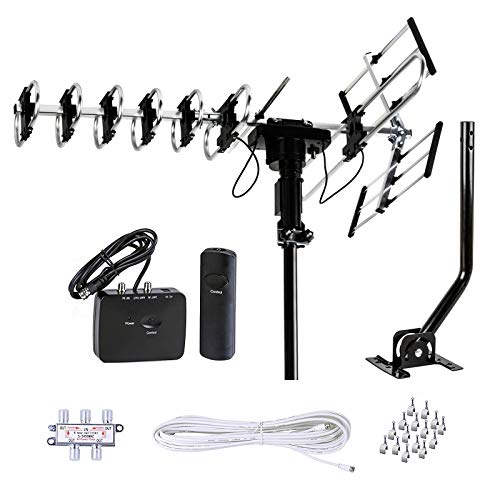
- Check whether mounting hardware and J-poles are included in the package.
- Determine if signal splitters are needed for connecting multiple televisions.
- Ensure built-in LTE or 5G filters exist to block mobile network interference.
- Confirm roof or attic clearance for 360 degree rotation models.
Final Thoughts
Finding the right hardware for clear television reception depends on your distance from local transmitters and site topography. For challenging suburban setups with fluctuating signals, we recommend the Televes 108381 8-Bay BOSS Mix HDTV Antenna for its intelligent signal management. It balances incoming frequencies automatically to deliver smooth HD viewing across channels.
Budget conscious buyers seeking strong performance will appreciate the GE Outdoor HD Digital TV Antenna. It combines compact weather resistant construction with reliable UHF and VHF reception. If your home feeds multiple screens from different tower locations, the Five Star Outdoor Antenna HD TV 200 Miles Range provides motorized positioning and mounting hardware. Explore additional visual equipment recommendations in our guide to external display options.
Frequently Asked Questions
How far can Best Reception Outside TV Antennas pull signals in 2026?
Most long range outdoor antennas reliably capture signals from 70 to 150 miles away depending on line of sight. Flat terrain and clear skies allow signals to travel further without obstruction. Hillside locations and dense forest can reduce practical reception range regardless of advertised ratings.
Does an outdoor antenna require professional installation?
Standard antenna packages include comprehensive mounting hardware and basic setup instructions. Mounting an antenna on a roof or chimney requires comfort working at heights and securing mounting brackets. Attic installations offer a simpler alternative for DIY homeowners seeking weather protected mounting.
Why are some channels missing after setting up Best Reception Outside TV Antennas?
Missing channels often indicate misaligned antenna orientation or missing VHF frequency support. Running an auto-channel scan on your TV menu updates available over the air broadcasts. Re-aiming the directional elements toward distant tower bearings usually restores missing network stations.
Is an amplified antenna better than a passive outdoor antenna?
Amplified antennas benefit installations with long cable runs or weak distant signals. However, preamplifiers can distort strong signals if you reside close to broadcast towers. Models with intelligent gain control automatically adjust amplification to maintain steady picture quality.
How does weather affect outdoor television antenna reception?
Heavy rain, snow, and dense cloud cover can temporarily attenuate high frequency broadcast signals. Wind can also move poorly secured antennas away from broadcast tower alignments. Sturdy mounting poles and weather resistant housing ensure consistent performance during storm events.
Can I connect an outdoor antenna to multiple TVs?
Yes, you can distribute antenna signals to multiple televisions using coaxial splitters or dual output control boxes. Powered splitters prevent signal strength loss when splitting signals across three or more screens. For related multi-screen setup ideas, check out our guide on desktop display setups.
Are outdoor TV antennas compatible with 4K NEXTGEN TV?
Modern outdoor antennas receive all over the air television signals including 1080p, 4K, and ATSC 3.0 broadcasts. The antenna captures radio frequency waves regardless of resolution format. You only need an ATSC 3.0 compatible tuner in your television or receiver box.