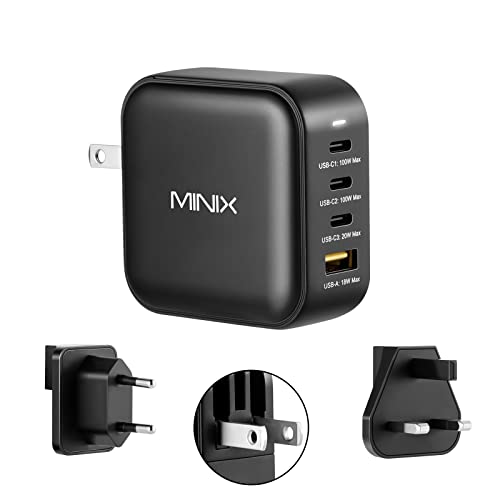
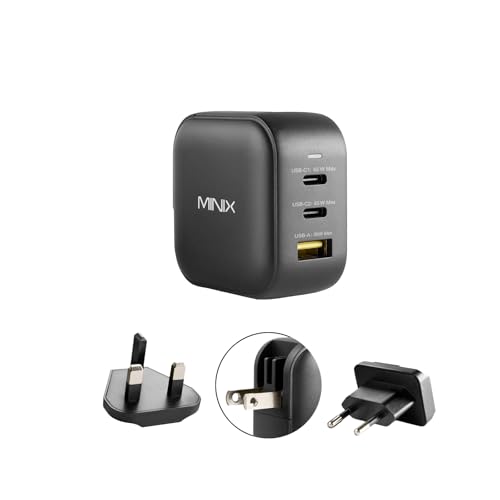
Finding reliable power for long campus lectures requires portable adapters that can recharge multiple gadgets quickly. For October 2026, our top recommendation among 5 featured models is the MINIX P1 66W Turbo 3-Port GaN Travel Wall Charger because it delivers balanced high-speed wattage for laptops and phones in a compact body. It fits effortlessly into packed bags and provides enough juice to keep essential hardware running through back-to-back study sessions.
If you want an ultra-slim adapter that rests completely flush against cramped library wall outlets, the MINIX 70W Flat USB C Wall Charger offers dual ports and high output in a pocket-sized chassis. Students setting up dorm workstations can also explore our How To guides to optimize daily productivity and device layouts.


Best USB-C Chargers for Students: Compact Power Picks Buying Guide
Total Wattage and Device Power Requirements
Matching charger output to your hardware prevents slow recharge cycles during short breaks between university classes. Lightweight notebooks like the MacBook Air thrive on 30W to 45W adapters, while performance machines demand 65W to 100W for full-speed operation.
Choosing an underpowered plug causes battery drain even while plugged in, especially during intensive research or creative tasks. We recommend determining the peak input rating of your primary laptop before selecting a companion adapter.
If you regularly connect your laptop to external displays at your desk, pairing a 65W or 100W charger with the best desktop monitors for Comfort, value and clarity guarantees stable power delivery without draining the battery.
Gallium Nitride (GaN) Technology and Efficiency
Modern GaN semiconductors replace older silicon components to deliver higher electrical efficiency in significantly smaller enclosures. This reduction in size allows manufacturers to build powerful charging blocks that occupy minimal room inside student backpacks.
GaN components also generate substantially less waste heat during heavy power conversion cycles. Cooler operation preserves the lifespan of internal circuits and ensures safe performance when chargers remain plugged into dorm walls for extended hours.
Port Selection and Dynamic Power Allocation
Multi-port power bricks allow students to energize a laptop, phone, and wireless earbuds from a single electrical outlet. However, multi-port adapters automatically redistribute total wattage across all active connections whenever new cables are inserted.
A 66W charger might drop to 45W on its primary port when a secondary phone cable is attached. Understanding these power-sharing formulas ensures your laptop maintains enough juice while your mobile accessories top up concurrently.
Form Factor, Flat Designs, and Foldable Prongs
Physical dimensions matter immensely when navigating crowded campus lecture halls with recessed or loosely fitting outlets. Ultra-slim flat chargers stay securely anchored to vertical wall plates without sagging or slipping out under cable weight.
Foldable prongs protect backpack linings and sensitive laptop screens from accidental scratches during transit. Fixed prongs add unnecessary bulk and risk bending when jammed into tightly packed textbook bags.
Fast Charging Protocols: PD 3.0 and PPS Support
Universal compatibility depends on supported charging standards such as USB Power Delivery 3.0 and Programmable Power Supply (PPS). Modern smartphones dynamically negotiate voltage and current in real time to optimize thermal health and battery longevity.
Lacking PPS support limits Samsung Galaxy and newer flagship phones to standard charging speeds rather than maximum rapid charging. Verifying full protocol coverage guarantees cross-brand utility across iPhones, Android phones, tablets, and mobile power banks.
Safety Systems and Worldwide Voltage Compatibility
Reliable power adapters incorporate comprehensive multi-protection systems to guard against overvoltage, overcurrent, short circuits, and extreme temperature spikes. These automated safeguards prevent irreversible electrical damage to expensive student tech.
International students and frequent travelers should verify support for universal 100-240V input ratings across global electrical grids. Adapters bundled with modular pin converters eliminate the need for bulky regional plug attachments during study abroad programs.
| Wattage Tier | Primary Device Support | Multi-Device Capability | Recommended Student Use |
|---|---|---|---|
| 30W – 33W | Smartphones, Tablets, MacBook Air | Single or Dual Low-Draw | Everyday lecture notes and phone top-ups |
| 66W – 70W | Mid-Range Laptops, Ultrabooks, Tablets | Laptop plus Smartphone | All-day campus study and library sessions |
| 100W | High-Performance Laptops, Multiple Devices | Up to 4 Devices Simultaneously | Heavy workloads and shared study desks |
How We Evaluated
We assessed every model by analyzing manufacturer technical specifications, GaN architecture efficiency, and real-world port output splits. Our evaluation focused on watt-per-ounce ratios, thermal management features, and protocol support across popular student hardware.
We examined plug stability, prong foldability, and global voltage adaptability to gauge day-to-day campus convenience. By comparing verified data points, we identified options that deliver dependable power without overburdening student bags.
Common Mistakes to Avoid
Overlooking multi-port wattage splits often leads to unexpected laptop throttling when a phone is plugged in simultaneously. Always check the secondary port ratings to ensure the primary port retains adequate power for your notebook.
Choosing adapters with rigid, non-folding prongs frequently results in snagged fabric and damaged backpack interiors. Foldable pins provide crucial protection and make packing significantly easier between morning classes.
Ignoring PPS compatibility prevents modern smartphones from utilizing their quickest possible charging rates. Verifying PPS certification ensures your handheld devices reach peak battery capacity in minimum time.
Buying oversized high-wattage bricks for basic tablet or phone needs adds needless weight to your daily carry. Selecting a matched wattage profile keeps your setup lightweight and perfectly suited for your academic routine.
Buying Checklist
- Check the maximum wattage requirements of your primary laptop to avoid underpowering.
- Confirm the adapter uses Gallium Nitride (GaN) for cool operation and compact dimensions.
- Verify whether the prongs fold flat to prevent damage inside your backpack.
- Review the specific multi-port power distribution table before connecting multiple devices at once.
- Ensure support for Power Delivery 3.0 and PPS protocols for optimal mobile phone charging.
- Check for built-in overcurrent, overvoltage, and thermal protection circuitry.
- Confirm universal 100-240V voltage compatibility if planning to travel or study abroad.
- Select a flat form factor if your dorm room or classrooms feature tightly spaced wall outlets.
Final Thoughts
Selecting the right power adapter eliminates battery anxiety during intense study sessions and long campus commutes. For balanced multi-device charging, the MINIX P1 66W Turbo 3-Port GaN Travel Wall Charger represents our best overall choice because it powers laptops and phones reliably without taking up excess room.
If you require maximum portability and slim aesthetics for narrow dorm outlets, the MINIX 70W Flat USB C Wall Charger is a phenomenal low-profile solution. Meanwhile, budget-conscious students needing reliable phone backups across multiple rooms will appreciate the MINIX P30 30W USB C Charger Block 2-Pack.
To build an ergonomic study space in your living quarters, check our guide on Computer Monitors & Displays for workspace inspiration. High-efficiency charging hardware keeps your essential gadgets energized and ready for every academic milestone.
Frequently Asked Questions
What is the top-rated option among Best USB-C Chargers for Students: Compact Power Picks in 2026?
The MINIX P1 66W Turbo 3-Port GaN Travel Wall Charger stands out as our top recommendation for student life. It balances three versatile output ports, high total wattage, and foldable prongs in a compact build that fits easily into any bag.
Can a 30W USB-C charger power a student laptop?
A 30W adapter can adequately power and charge compact ultrabooks like the MacBook Air during standard productivity tasks. However, larger 15-inch or 16-inch laptops require at least 65W to operate under heavy workloads without draining internal battery reserves.
Why is GaN technology important for college students?
Gallium Nitride technology allows power adapters to be up to 50 percent smaller than legacy silicon bricks while running noticeably cooler. This enables students to pack high-wattage charging blocks into small pouches without adding unnecessary weight to daily commutes.
What happens when multiple devices are plugged into a multi-port charger?
The charger uses dynamic power sharing to divide its total wattage across all connected cables based on programmed priority rules. Connecting a smartphone to a secondary port may temporarily reduce laptop charging speed to ensure balanced electrical distribution.
Can these chargers power laptops connected to external monitors?
Yes, higher-wattage models like the 66W and 100W adapters provide ample current for laptops connected to the best external monitors. Having sufficient adapter wattage ensures your workstation runs smoothly during demanding multitasking sessions.
What is PPS and do students need it?
Programmable Power Supply (PPS) is an advanced charging protocol that adjusts voltage and current dynamically in real time. It is essential for fast charging modern Samsung Galaxy smartphones and other modern devices while minimizing heat buildup inside the battery.
Are flat USB-C wall chargers better for classroom outlets?
Flat wall chargers sit completely flush against the wall surface, preventing heavy cables from pulling the plug downward. This design is exceptionally helpful for loose or heavily worn outlets frequently encountered in older campus lecture halls and libraries.
Can I use these chargers when studying abroad?
Most quality GaN wall plugs support universal 100-240V AC input, allowing them to function worldwide safely. Many travel-focused models also include interchangeable international plug adapters to fit standard electrical sockets across the UK, Europe, and Asia.