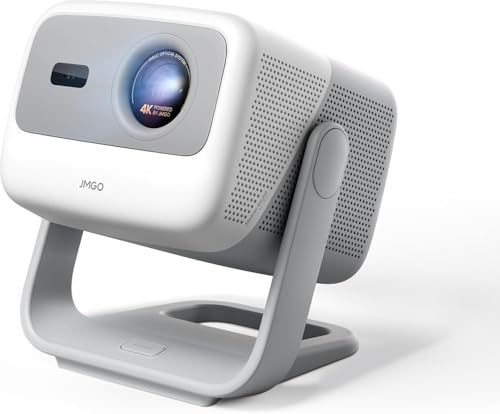

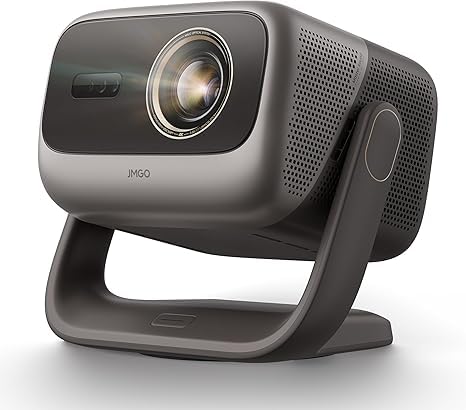
Finding the ideal visual setup for home entertainment requires matching brightness, resolution, and throw ratio to your room layout. For viewers seeking unmatched brightness and image fidelity, the JMGO N3 Ultimate 4K Triple Laser Projector stands out as our top recommendation due to its massive light output and versatile motorized gimbal positioning.
If you need high performance in a compact footprint or close-to-wall installation, the JMGO O2S Ultra 4K Ultra Short Throw Triple Laser delivers an impressive ultra-short-throw image without sacrificing optical quality. Readers exploring high-end home visuals can also review our guide on high-resolution displays for smaller desktop setups.



Best High Definition Projectors Buying Guide for 2026
Light Source and Laser Technology
Modern home theater optics have evolved far beyond traditional lamp-based systems. Pure RGB triple laser engines deliver superior color accuracy, wider gamuts, and longer operational lifespans without the color wheel artifacts seen in older DLP designs.
Choosing a tri-color laser engine ensures vibrant color reproduction that covers extended spectrum standards like BT.2020. This optical clarity benefits users comparing high-end cinema units against standard 4K and high-resolution displays.
Throw Ratio and Space Requirements
The throw ratio determines how far the device must sit from your screen or wall to project a given image size. Standard throw units require several feet of clearance, whereas ultra-short-throw models project 100-inch images from just inches away.
If your room layout has tight dimensions or foot traffic, ultra-short-throw options prevent shadows and simplify cable management. Dedicated media rooms with ceiling mounts often benefit more from standard throw lenses paired with optical zoom capabilities.
Luminance, ISO Lumens, and Ambient Light
Brightness dictates whether an image remains punchy in daylight or requires complete darkness. High ISO lumen ratings ensure that ambient light in living rooms does not wash out shadows or dull highlights.
Units offering over 3000 ISO lumens maintain strong color saturation during daytime viewing. For dark room viewing, lower lumen outputs can still provide cinematic depth without causing optical fatigue.
Contrast Ratios and Dolby Vision Support
High dynamic contrast allows deep black levels to coexist alongside bright highlight details in dark movie scenes. Support for advanced HDR formats like Dolby Vision optimizes tone mapping frame by frame for realistic imagery.
Pro-level black level enhancement prevents dark scenes from looking greyed out or muddy. Matching HDR support with high color accuracy yields an image quality comparable to dedicated studio monitors.
Smart OS Integration and Streaming
Integrated operating systems like Google TV eliminate the need for external media dongles by providing direct access to streaming applications. Official licensing for platforms such as Netflix ensures seamless playback without playback workarounds.
Smart connectivity features such as built-in Chromecast and voice controls streamline daily operation. You can learn more about modern display interfaces in our guide on HDMI display solutions.
Refresh Rates and Gaming Latency
Interactive entertainment demands low input lag and high refresh rates for responsive control. Modern displays feature dedicated game modes, support for 240Hz refresh rates, and variable refresh rate technology to eliminate tearing.
Gamers connecting consoles or PCs should verify HDMI 2.1 support to unlock full 4K bandwidth and low-latency modes. Choosing a display with fast response times ensures smooth motion in fast-paced action games.
| Feature Standard | Ultra Short Throw | Standard Throw Gimbal | High Brightness Theater |
|---|---|---|---|
| Throw Ratio | 0.16:1 | 1.2:1 | 0.88 – 1.7:1 (Zoom) |
| Ideal Environment | Living Room Credenza | Bedrooms & Mobile Setups | Dedicated Home Cinema |
| Screen Size Range | 80″ to 150″ | 100″ to 200″ | 100″ to 300″ |
| Optical Adjustment | Fixed Short Focus | Gimbal Tilt & Pan | Motorized Lens Shift |
How We Evaluated
Our comparative analysis evaluates verified technical specifications, light engine performance, color gamut specs, and physical throw mechanics across 5 models. We examined optical zoom capabilities, native contrast performance, smart OS licensing, and spatial audio compatibility.
We prioritized objective data across luminance metrics, thermal management design, input latency benchmarks, and installation flexibility. This ensures our recommendations match real-world home cinema requirements across price points ranging from $839.00 – $2,349.00.
Common Mistakes to Avoid
One common mistake is neglecting throw distance calculations before purchasing your display unit. Installing a standard throw projector in a small room can force unwanted digital keystone correction, which reduces overall image resolution.
Another oversight is evaluating display brightness solely on peak lumen claims while ignoring dynamic contrast ratios. Without deep black levels, high brightness can result in washed-out visuals in dark scenes.
Buyers also frequently forget to consider sound system integration. While built-in speakers provide convenience, dedicated high-fidelity sound pass-through via eARC HDMI is essential for full surround sound integration.
Buying Checklist
- Measure room throw distance to confirm whether short throw or standard throw is required.
- Verify native resolution and HDR format support, including Dolby Vision and HDR10.
- Check ISO lumen output ratings to match your expected room ambient lighting conditions.
- Confirm optical zoom and physical lens shift features to avoid resolution loss from digital correction.
- Inspect audio output ports and eARC HDMI 2.1 compatibility for external AV receivers.
- Ensure official smart OS licensing for direct access to native streaming apps like Netflix.
- Confirm input lag specifications and variable refresh rate support if connecting gaming consoles.
Final Thoughts
Selecting the ideal display setup comes down to your space, lighting conditions, and primary entertainment needs. For dedicated theater rooms requiring maximum brightness and projection scale, we recommend the JMGO N3 Ultimate 4K Triple Laser Projector for its impressive light output and motorized adjustment system.
If you require a low-profile installation directly against a wall, the JMGO O2S Ultra 4K Ultra Short Throw Triple Laser provides a sleek alternative with cinematic color rendition. Those looking for portable versatility will find excellent overall value in the JMGO N1S 4K Upgrade Triple Laser Projector.
For additional display setup insights and desktop visual comparisons, explore our guide on external monitors and explore our dedicated how to guides section.
Frequently Asked Questions
What are the key benefits of choosing the Best High Definition Projectors in 2026?
Modern high definition displays offer massive screen sizes up to 300 inches while maintaining ultra-sharp image clarity. Advanced triple laser light engines provide wider color gamuts, instant power control, and long operational lifespans without lamp replacements.
How does an ultra short throw projector differ from a standard throw model?
An ultra short throw projector uses specialized wide-angle optics to produce a 100-inch or larger picture from just inches away from the wall. Standard throw models require several feet of clearance behind the seating area to achieve similar screen dimensions.
Can high definition projectors completely replace a traditional TV in bright rooms?
High brightness models featuring 3000 ISO lumens or higher can deliver clear, vibrant pictures in ambient room light. Pairing high-lumen projectors with ambient light rejecting screens further improves contrast during daytime viewing.
What is the difference between optical zoom and digital keystone correction?
Optical zoom adjusts the picture size mechanically using internal lenses, preserving full 4K pixel resolution. Digital keystone crops and rescales the image digitally, which reduces active resolution and light efficiency.
Are laser projectors suitable for competitive video gaming in 2026?
Yes, modern high definition projectors equipped with high-speed processing chips offer input latency as low as 1ms. Features like 240Hz refresh rates and HDMI VRR support make them ideal for fast-paced gaming. Gamers can also compare performance against specialized gaming displays.
Do modern laser projectors require external speakers?
Many units come equipped with high-performance integrated speakers tuned by audio brands like Dynaudio, supporting Dolby Audio and DTS formats. However, connecting an external soundbar or AV receiver via HDMI eARC yields a superior spatial audio experience.
What maintenance is required for triple laser projectors?
Solid-state triple laser engines are virtually maintenance-free because they do not rely on fragile lamps or color wheels. Periodic cleaning of dust filters and lens glass is typically all that is required for continuous operation.